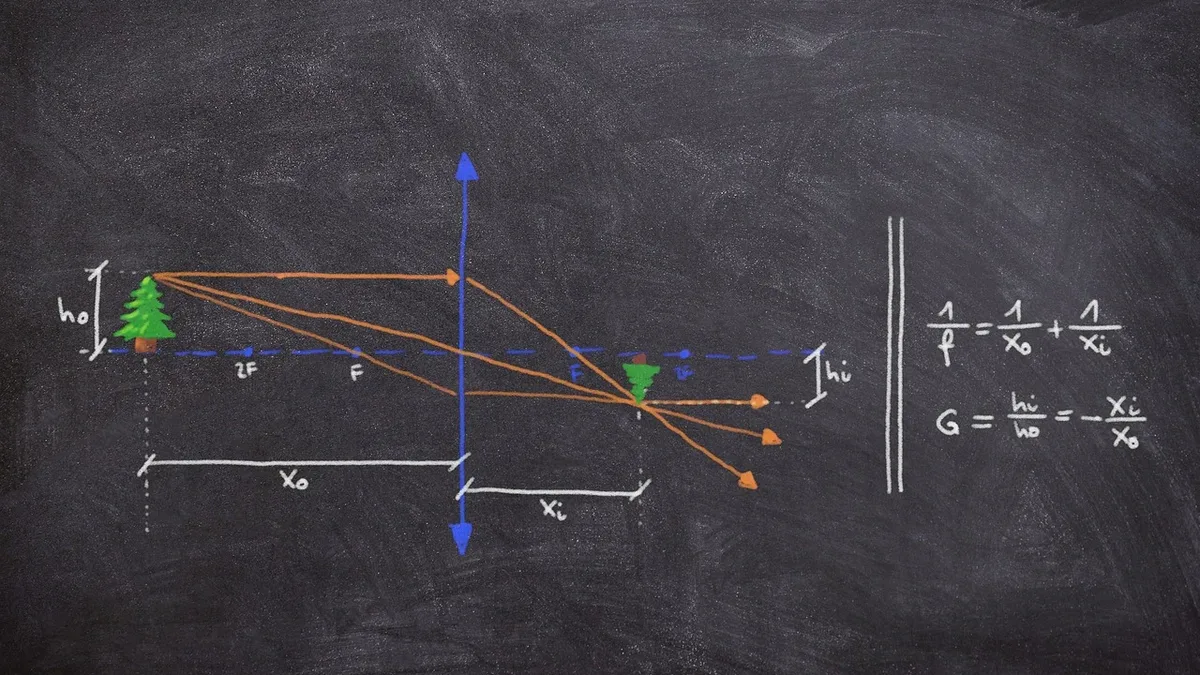
Thermodynamics And Statistical Physics
| Prerequisites | Calculus, introductory physics |
|---|---|
| Core topics | Laws of thermodynamics, kinetic theory, statistical ensembles |
| Mathematical foundation | Probability theory, combinatorics, differential equations |
| Typical level | Advanced undergraduate or graduate course |
| Key textbooks | Landau & Lifshitz, Reif, Pathria |
| Experimental basis | Macroscopic observations of heat, work, and state variables |
| Central goal | Derive macroscopic laws from microscopic particle statistics |
Overview
Thermodynamics and Statistical Physics are two deeply interconnected frameworks for understanding the macroscopic behavior of matter and energy. Thermodynamics provides a phenomenological description based on a few fundamental laws, dealing with quantities like temperature, entropy, and free energy without reference to microscopic structure. Statistical physics, particularly statistical mechanics, provides the underlying microscopic foundation by connecting the bulk properties of a system to the statistical behavior of its vast number of constituent particles. The core link is established through the concept of entropy, which in thermodynamics is a measure of disorder and in statistical physics is defined as a logarithm of the number of microscopic states corresponding to a given macroscopic state. This combined framework is essential for explaining phenomena from the efficiency of heat engines to the magnetic properties of materials. It forms the theoretical backbone for fields as diverse as chemistry, materials science, astrophysics, and even aspects of information theory.
What to know
The four laws of thermodynamics form an axiomatic foundation, with the zeroth law establishing temperature equilibrium, the first law defining conservation of energy, the second law introducing the concept of entropy and the irreversibility of natural processes, and the third law stating the unattainability of absolute zero. Statistical mechanics introduces key ensembles: the microcanonical ensemble for isolated systems, the canonical ensemble for systems in thermal contact with a heat bath, and the grand canonical ensemble for systems that can also exchange particles. The calculation of partition functions is central, as they serve as generating functions for all thermodynamic quantities. Fluctuations, which are negligible in truly macroscopic systems but become significant in small or critical systems, are naturally described within the statistical framework. Understanding phase transitions, like the change from a liquid to a gas, requires statistical physics to explain how cooperative behavior emerges from microscopic interactions. The field also rigorously justifies the ideal gas law and derives corrections for real gases through virial expansions.
Common questions
A frequent question is about the difference between heat and temperature, where heat is energy in transit due to a temperature difference, while temperature is an intensive property related to the average kinetic energy of particles. Many ask why the second law permits increasing order in some systems, such as crystal formation; the key is that the law requires the total entropy of the universe to increase, so local order can increase if it is offset by greater disorder elsewhere. Students often confuse the statistical definition of entropy with subjective disorder, but it is a precise measure of the number of accessible microstates. Another common inquiry concerns the practical impossibility of reaching absolute zero as stated by the third law, which is explained by the fact that the number of steps required to remove the last increments of entropy becomes infinite. People also question how time-reversible microscopic laws can lead to the macroscopic irreversibility described by the second law; this is resolved statistically, as the probability of a system evolving from a high-entropy state back to a low-entropy one is vanishingly small but not strictly zero.
Pros and cons
A major strength of this combined framework is its immense generality and predictive power, applying to systems as varied as black holes, chemical reactions, and polymers without requiring detailed knowledge of every particle's trajectory. The statistical approach provides profound insight into the meaning of thermodynamic quantities, transforming abstract concepts like entropy into concrete, calculable quantities. However, a significant con is the steep mathematical and conceptual learning curve, requiring comfort with multivariable calculus, partial derivatives, and abstract probability theory, which can deter students seeking more intuitive physical models. Those who regret delving into it are often individuals interested only in applied engineering thermodynamics who find the statistical mechanics layer unnecessarily abstract for their immediate design calculations. A common mistake is to apply equilibrium statistical mechanics results to systems that are far from equilibrium, leading to incorrect predictions. Furthermore, while the framework sets limits (like maximum engine efficiency), it often does not provide the kinetic pathways or rates for processes, which require separate, often more complex, dynamical theories.
Who it suits
This subject suits theoretical physicists and physical chemists who seek a fundamental understanding of how macroscopic laws emerge from microscopic constituents. It is essential for researchers in condensed matter physics, where explaining phenomena like superconductivity or magnetism relies heavily on statistical mechanical models. Aspiring astrophysicists also require this knowledge to model stellar interiors and cosmological processes involving thermodynamics in extreme conditions. Materials scientists benefit from the framework for understanding phase diagrams, alloy properties, and thermodynamic stability of new compounds. It is well-suited for students with a strong aptitude for abstract reasoning and mathematical formalism, who are comfortable with probabilistic thinking. Finally, it is crucial for those working in emerging interdisciplinary fields like biophysics, where concepts from statistical physics are used to model protein folding, and in quantum information theory, where entropy and thermodynamics are reinterpreted in the context of information.
Latest Thermodynamics And Statistical Physics news
Latest reporting

Erk Gradients Control Zebrafish Fin
Researchers have identified how zebrafish fins regenerate to their exact pre-injury size. A study in *Nature Physics* shows that gradients of Erk...
Harvard study models physics of kiiking
Harvard researchers have published a mathematical analysis of kiiking, Estonia's extreme swinging sport. The study frames the athlete's ability to...

ATLAS pushes limits on quantum black holes, lepton-flavour violation and Clockwork gravitons
ATLAS at the LHC conducts three new searches for physics beyond the Standard Model, targeting TeV-scale quantum black holes, lepton-flavour-violating...

New theory may solve 30-year neutrino mystery
A theoretical study suggests that missing neutrinos in gallium-based experiments may not indicate a new particle but could be due to a calculation...

Exact Time-Correlated Coincidence Modeling with Reset Boundaries
Physicists have developed a new method for analyzing rare prompt-delayed signals in high-energy physics experiments.

MIT Physicists Uncover Hidden Physics Behind Electronic Phase Transitions in Quantum Materials
MIT researchers have made a groundbreaking discovery in the field of quantum materials, uncovering new details about how two distinct forms of...