Sunlight Creates Quantum Entanglement Once Thought to Require Lasers
Scientists have generated quantum entanglement directly from sunlight, potentially offering a lower-energy alternative to the lasers normally used in quantum technology.
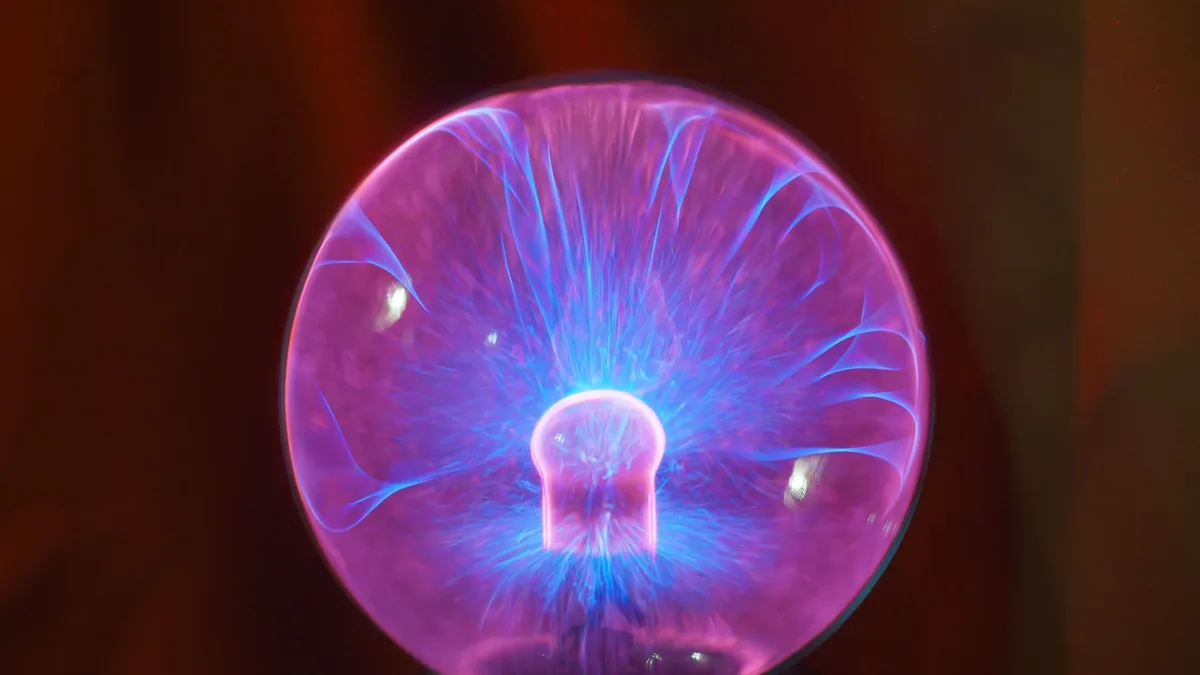
Sunlight has been used to create quantum entanglement, a phenomenon once thought to require powerful lasers. This breakthrough could pave the way for simpler quantum satellites, secure communications, and more energy-efficient quantum computing.
The achievement was made possible by a team of researchers who brought together theoretical work from the University of Ottawa and a new solar concentrator created by the Max Planck Institute for the Science of Light in Germany. The team used spontaneous parametric down-conversion (SPDC) to generate entangled photons from sunlight.
The researchers relied on a solar concentrator to collect and concentrate sunlight onto a tiny nonlinear crystal, which produced the entangled photons. The concentrator used a Fresnel lens to channel the concentrated sunlight into an optical fiber, which was then directed onto the nonlinear crystal.
The team tested their setup during an outdoor experiment at the Max Planck Institute and found that the entanglement produced with sunlight was about 94% similar to a perfectly entangled state. The photons also displayed correlations that violate Bell's inequality, providing evidence that genuine quantum entanglement was produced.
The result overcame significant doubts within the scientific community about whether sunlight could realistically drive the process. The researchers are now working to increase the brightness and quality of the entanglement, with the goal of creating a system that could be used outside the laboratory.
The underlying approach could also work with other nonlinear optical techniques, including four-wave mixing. This could create new possibilities across quantum photonics and potentially lead to the development of more energy-efficient and accessible quantum technologies.
## Challenging Assumptions About Quantum Light
Scientists have traditionally believed that producing the strong correlations needed for photon entanglement requires coherent light. However, earlier research from the University of Ottawa's Robert Boyd's team began to challenge that assumption. They predicted theoretically and then demonstrated experimentally that incoherent light could also generate quantum entanglement.
The new work pushes that concept further by replacing the LED with sunlight. Sunlight presents a much greater challenge because it spreads in many directions and contains a wide spectrum of colors.
## Creating Entangled Photons With Sunlight
To generate the entangled photons, the researchers relied on spontaneous parametric down-conversion (SPDC). In this established optical process, a pump beam enters a nonlinear crystal, where individual photons can split into pairs that may become quantum entangled.
The team supplied the system with sunlight, which was strongly polarized while remaining highly incoherent across both space and time. Its overall light field oscillated in the same direction, even though it contained photons of different colors traveling along many different paths.
The researchers designed their experimental setup so that differences introduced by the different colors and propagation directions didn't influence the photons' polarization. This allowed them to produce high-quality polarization entanglement from highly spatially and temporally incoherent sunlight.
## Sunlight Produces Strong Quantum Entanglement
The researchers tested both their theoretical predictions and the new concentrator during an outdoor experiment at the Max Planck Institute. They used quantum state tomography to analyze the resulting quantum state and found that the entanglement produced with sunlight was about 94% similar to a perfectly entangled state.
The team also found that the photons displayed correlations that violate Bell's inequality. That result is especially important because such correlations cannot be explained by classical physics and instead provide evidence that genuine quantum entanglement was produced.
## From Skepticism to a Working Experiment
The result also overcame significant doubts within the scientific community about whether sunlight could realistically drive the process. The researchers are now working to increase the brightness and quality of the entanglement, with the goal of creating a system that could be used outside the laboratory.
The underlying approach could also work with other nonlinear optical techniques, including four-wave mixing. This could create new possibilities across quantum photonics and potentially lead to the development of more energy-efficient and accessible quantum technologies.