Spacetime crystal can become a black hole
Physicists have derived an exact mathematical formula for a 'spacetime crystal' state that can either dissolve or collapse into a microscopic black hole
Physicists from Goethe University Frankfurt and TU Wien have mathematically described a bizarre 'spacetime crystal' state. This critical structure can either dissolve or collapse into a microscopic black hole after only a tiny change in energy, according to the researchers. Their work, published in Physical Review Letters on August 30, 2026, provides a new analytical tool for studying phenomena like primordial black hole formation.
While most black holes form from collapsing stars, theory allows for microscopic versions. These could arise from special critical states in spacetime itself. The new research captures one such state mathematically for the first time.
The Critical State of Spacetime
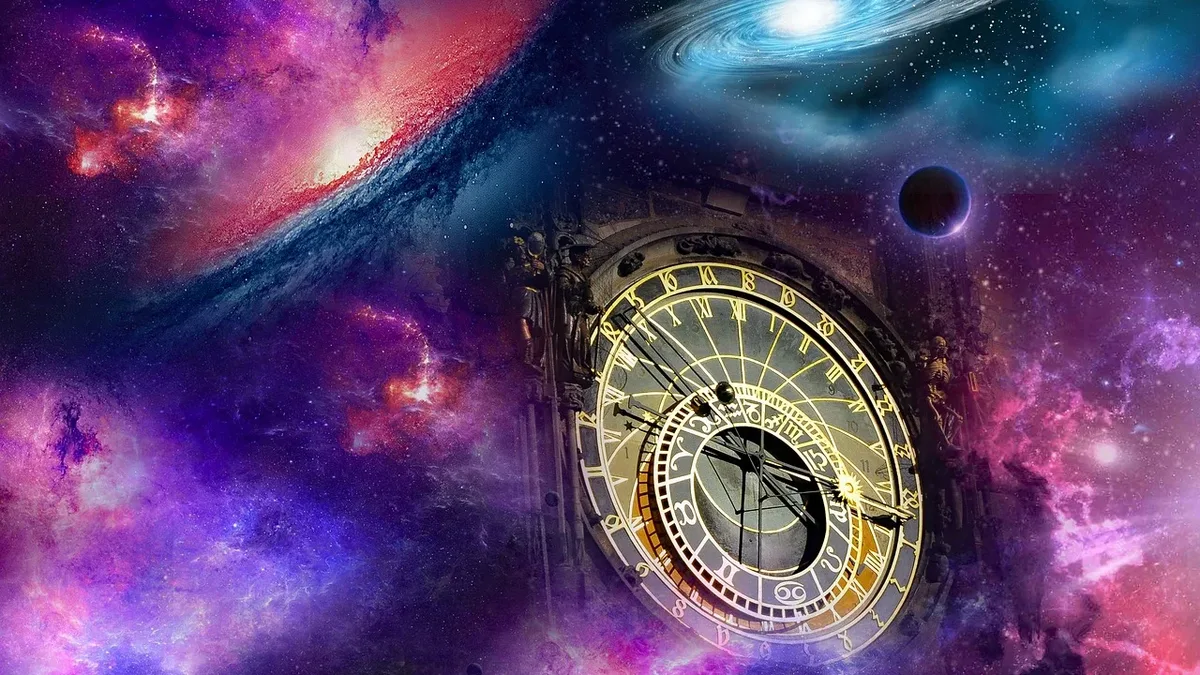
Under certain conditions, the curvature of spacetime can arrange itself into a repeating pattern across space and time. The scientists call this a spacetime crystal. It is an unstable intermediate state. Professor Daniel Grumiller from TU Wien compares it to water at zero degrees Celsius. A very small change can make it freeze into ice. Similarly, a tiny energy input can push the spacetime crystal toward collapse.
"This spacetime crystal is a very peculiar and fascinating object," says Grumiller. He explains it can evolve in two directions. It may simply dissolve back into ordinary spacetime. Or, if a tiny amount of energy is added, it turns into a black hole. This process is known as critical collapse.
An Infinite-Dimensional Mathematical Trick
Deriving formulas for this process in our four-dimensional universe proved exceptionally difficult. The team found a solution by changing their mathematical approach. They first analyzed the problem in a hypothetical setting with infinitely many dimensions.
"It might seem that adding dimensions would make an already difficult problem even more complicated. Surprisingly, the opposite can happen," explains Christian Ecker from Goethe University Frankfurt. Certain calculations become easier when the number of dimensions approaches infinity.
The researchers used this infinite-dimensional framework to find an analytical solution. They then translated the results back toward our four-dimensional reality. This detour provided information that was previously only accessible through computer simulations.
A New Tool for Black Hole Physics
The method offers a new way to study black hole formation analytically. Florian Ecker from TU Wien notes the technique is stable. "Depending on the desired precision, we can systematically improve our formulas using additional approximation methods," he says. This could allow physicists to study microscopic and primordial black holes without relying solely on numerical simulations.
The concept of black holes forming through such critical behavior was first indicated by computer simulations in 1993. The new mathematical description finally provides an exact formula for the phenomenon. The work gives researchers a pencil-and-paper method to explore these extreme states of spacetime.