Results & debates
Dark Energy Survey Data Reveals Cosmological Model Cracks
The Dark Energy Survey's final data, combined with DESI results, suggests the standard cosmological model is incomplete.
Results & debates on Mass and Motion: Recent measurements and what they mean, Hubble tension, muon g-2, Replication and null results, Preprints on arXiv and Claims that did not hold up.
The Dark Energy Survey's final data, combined with DESI results, suggests the standard cosmological model is incomplete.
Researchers at the European XFEL have generated attosecond hard X-ray pulses with a record intensity of 118.8 GW, focused to a spot measuring 180 by 330 nanometers. This breakthrough enables the direct imaging of electron motion in atoms and molecules on their natural timescale.
Physicists have discovered gravitational reconnection, a process where space-time sheets break and reconnect to transfer energy into matter, drawing parallels to magnetic reconnection in plasmas.

A theoretical study proposes a long-lived heavy neutrino briefly dominated the cosmos after the Big Bang, altering expansion to allow matter to survive annihilation with antimatter.

Analysis of uranium cubes and records reveals the B8 reactor, built in 1945, lacked sufficient uranium and heavy water to sustain a nuclear chain reaction, disproving claims it was near success.

A study for the proposed FCC-ee collider details a method for simultaneously measuring Higgs boson decays to WW and ZZ particles with high precision, targeting uncertainties as low as 1.48%.
Researchers at Tohoku University have demonstrated that varying the number of layers in a crystal provides a systematic method for designing topological magnets.
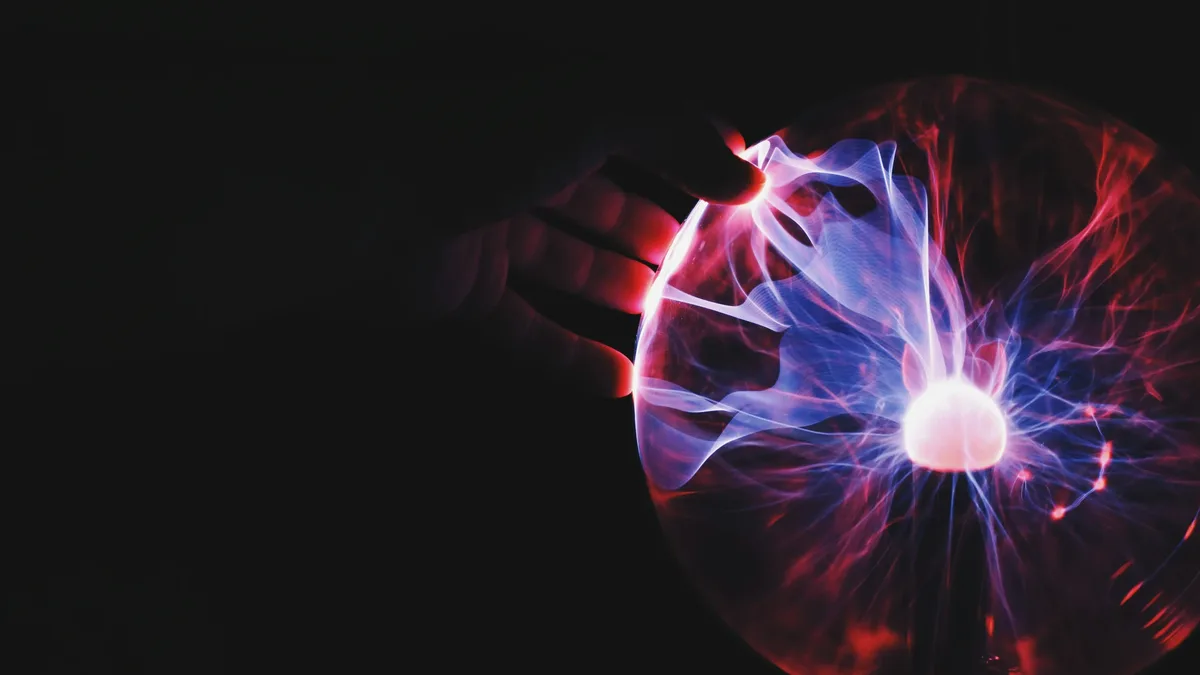
Tokyo Metropolitan University researchers found that generating oxygen plasma at moderately reduced pressure extends the lifetime of reactive atomic oxygen.
The LHCb experiment reports new branching fraction measurements for rare anomalous decays of the η and η' mesons, including the first search for η'→μ⁺μ⁻.
An international team shows artificial intelligence can design physics experiments using existing lab components that yield more precise results.

The HADES collaboration has published the first results from its upgraded detector, measuring differential cross sections for proton-proton elastic scattering.