Quantum Entanglement
| Concept | Quantum Entanglement |
|---|---|
| First described | 1935 (in the EPR paper) |
| Core definition | A physical phenomenon where the quantum states of two or more particles are linked, such that measuring one instantly influences the other, regardless of distance. |
| Key property | Non-locality (the correlation is independent of spatial separation) |
| Typical test | Bell test experiments (e.g., by Alain Aspect, 1982) |
| Commonly used particles | Photons, electrons, atoms |
| Original use case | A thought experiment to challenge the completeness of quantum mechanics |
| Current applications | Quantum cryptography, quantum computing, quantum teleportation protocols |
Origin and history
The theoretical foundations of quantum entanglement emerged in Europe during the first half of the 20th century, primarily from the development of quantum mechanics itself. The concept became starkly apparent in a 1935 paper by Albert Einstein, Boris Podolsky, and Nathan Rosen, who used a thought experiment to argue that the "spooky action at a distance" implied by entanglement showed quantum theory was incomplete. This paper, originating from the Institute for Advanced Study in the United States, formulated the famous EPR paradox that highlighted the paradoxical nature of the phenomenon. Physicist Erwin Schrödinger, also in 1935, coined the term "entanglement" and identified it as the essential characteristic of quantum mechanics. For decades, the debate remained largely philosophical, as the predictions of quantum mechanics concerning entangled particles were not experimentally testable. This changed in the 1960s when physicist John Bell, working at CERN in Europe, derived his famous inequalities, providing a concrete mathematical framework to test local hidden variable theories against quantum mechanics.
What it is for
Quantum entanglement is a physical phenomenon that serves as a foundational resource for emerging technologies in quantum information science. Its primary function is to create correlations between quantum particles, such as photons or electrons, that are stronger than any possible classical correlation. These correlations are exploited in quantum cryptography, specifically in Quantum Key Distribution (QKD), to create theoretically unhackable communication channels by detecting any eavesdropper attempting to measure the entangled states. Entanglement is also the essential operational resource for quantum computing, where entangled qubits allow for parallel processing on a massive scale through quantum parallelism. Furthermore, it enables quantum teleportation protocols, which transfer the quantum state of a particle onto another distant particle without physically transmitting the particle itself. In fundamental physics, experiments on entanglement are used to rigorously test the principles of quantum mechanics against alternative theories, probing the very nature of reality and locality.
Pros and cons
A primary advantage of quantum entanglement is that it enables fundamentally secure communication, as any interception of an entangled photon pair disturbs their state and is immediately detectable. It also provides the potential for massive computational speedups for specific problems, like integer factorization, that are intractable for classical computers. A significant con is the extreme technical difficulty and cost of maintaining entangled states, which are fragile and easily destroyed by interaction with their environment through decoherence. Practitioners often regret underestimating the immense engineering challenge of scaling systems from a few entangled qubits to the hundreds or thousands needed for practical quantum computing, a common mistake in the field. Furthermore, while theoretically powerful, most proposed quantum algorithms require error correction schemes that themselves demand vast overheads of additional entangled qubits, creating a major practical bottleneck.
Who it suits
Quantum entanglement suits researchers in foundational physics who are testing the boundaries of quantum theory and investigating concepts like non-locality. It is critical for specialists in quantum information science, including quantum algorithm designers and quantum hardware engineers working on computers and simulators. Cryptographic experts and government agencies focused on securing communications for the long-term future are suited to develop and deploy quantum key distribution networks. The technology also suits well-funded national laboratories and large technology corporations that can sustain the high cost and long development timelines associated with quantum research and infrastructure. It does not suit hobbyists or conventional software developers, as working with entanglement requires deep expertise in quantum mechanics and access to highly specialized, expensive laboratory equipment. Organizations seeking immediate, practical commercial applications from quantum technology may find the current state of entanglement-based systems premature for their needs.
Latest Quantum Entanglement news
Latest reporting
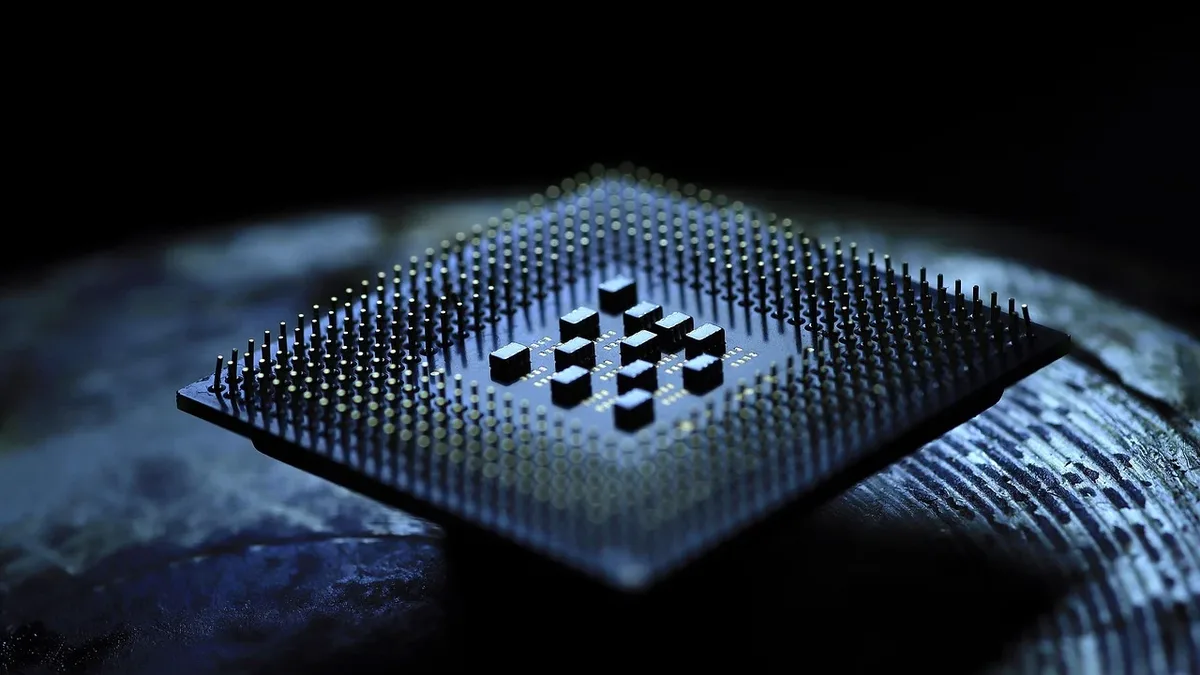
Single-photon skyrmion topology transferred between entangled photons
Researchers used a silicon-nitride photonic chip to transfer the topology of a single-photon quantum skyrmion to an entangled photon pair.

Fundamental Constants Constrain Liquid-Based Life
A theoretical study finds the universe's physical constants must allow liquids to flow for life to exist, while separate research derives Einstein's...

Kinetic Artwork Superposition Visualizes Quantum Strangeness
A kinetic art exhibition at the University of Strathclyde uses 16 spinning aluminium panels to create visual analogies for quantum superposition and...
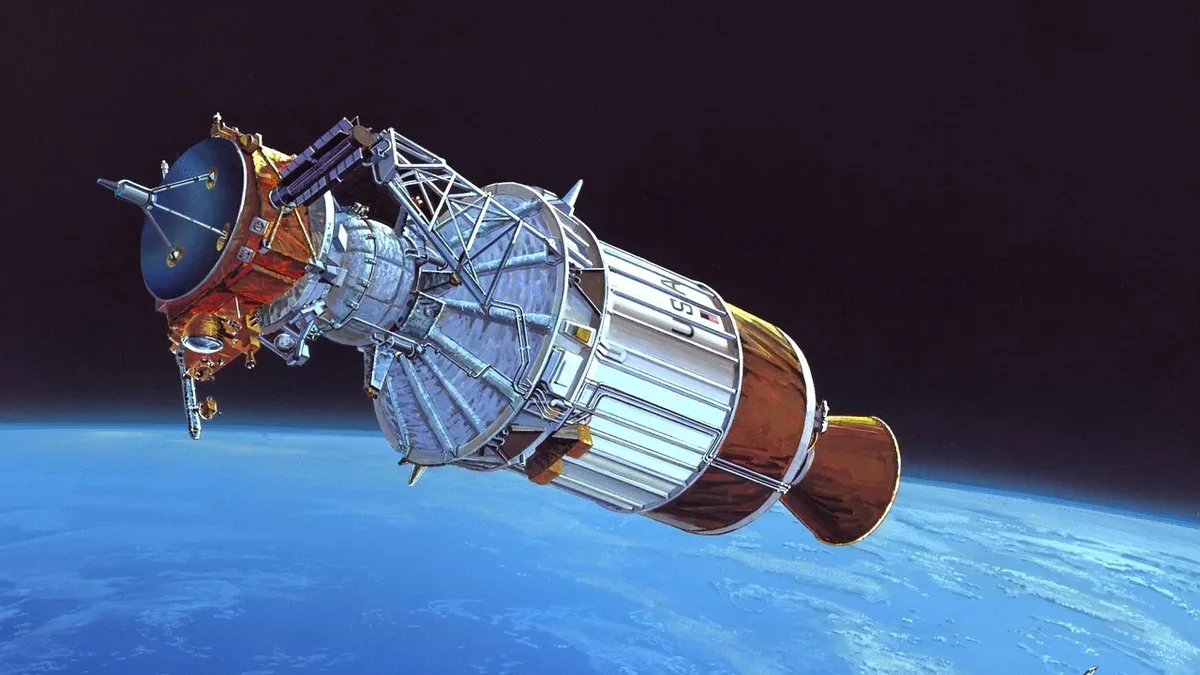
Quantum photonic processor demonstrates two-photon interference in orbit
A quantum photonic processor launched in June 2025 has successfully observed two-photon interference in low Earth orbit.
Independent labs confirm e/4 charge in gallium arsenide
Two independent experiments have measured quasiparticles carrying one-quarter of an electron's charge in the ν = 1/2 fractional quantum Hall state.

Spin Rephasing Stores Single Photons for 180 Microseconds
ICFO researchers stored single photons for up to 180 microseconds using spin rephasing in a praseodymium-doped crystal quantum memory.