Quantum Information
| Concept | Quantum entanglement |
|---|---|
| Experiment or observation | Bell test experiments |
| Original use | Theoretical prediction in quantum mechanics |
| First created | 1935 (theoretical paper) |
| Key principle | Non-local correlation between particles |
| State property | Entangled state is inseparable |
| Test outcome | Violation of Bell inequalities |
| Application example | Quantum key distribution |
Origin and history
Quantum Information as a formal field of study emerged primarily from the convergence of quantum mechanics and information theory in the latter part of the 20th century. Its foundational ideas originated from work by physicists and mathematicians in Europe and North America. The field was catalyzed in the early 1980s by key theoretical proposals, such as those by physicist Paul Benioff who modeled a quantum mechanical Turing machine, and Richard Feynman who suggested that simulating quantum systems would require a computer itself operating on quantum principles. The concept of quantum cryptography was introduced by Stephen Wiesner in the early 1970s and later expanded by Charles Bennett and Gilles Brassard in 1984 with the BB84 protocol for quantum key distribution. The pivotal theoretical breakthrough of quantum error correction codes in the mid-1990s, by researchers including Peter Shor and Andrew Steane, provided a crucial argument against the belief that quantum coherence was too fragile for practical use. These developments established the core framework for manipulating and transmitting information encoded in quantum states, distinguishing it from classical information science.
What it is for
Quantum Information science aims to understand how information is encoded, processed, and transmitted using the principles of quantum mechanics. Its primary purpose is to develop new technologies that outperform classical systems in specific tasks, leveraging phenomena like superposition and entanglement. One central application is quantum computation, which seeks to solve certain problems, such as large integer factorization or simulating quantum chemistry, exponentially faster than the best-known classical algorithms. Another key purpose is quantum communication, which enables intrinsically secure cryptographic key exchange and the potential linking of future quantum processors into a network. The field also aims to achieve ultra-precise quantum metrology and sensing, using quantum states to measure physical quantities like time, gravity, or magnetic fields with accuracy beyond the classical limit. Fundamentally, the field serves to probe the foundations of quantum theory itself, using information-theoretic concepts to deepen our understanding of reality.
Pros and cons
A primary advantage of quantum information technologies is their potential to solve specific, computationally intractable problems that are central to cryptography, materials science, and drug discovery. They offer a paradigm for fundamentally secure communication based on the laws of physics rather than computational complexity. A significant con is the extreme technical difficulty in maintaining quantum coherence; qubits are exceedingly fragile and lose their quantum state through decoherence caused by minute interactions with their environment. This necessitates massive, complex, and expensive engineering for error correction and cryogenic cooling, currently limiting practical devices to a modest number of qubits. A common mistake in the field is underestimating the systems engineering challenge of scaling up from a few controlled qubits to thousands of logical qubits, a task requiring orders-of-magnitude improvement in error rates. Many researchers and investors have regretted premature predictions of imminent, widespread commercialization, as the path from laboratory proof-of-concept to a robust, general-purpose technology is proving far longer and more costly than initially envisioned. The field also faces a con in the narrow applicability of known quantum algorithms; they offer dramatic speedups for only a limited set of problems, leaving many common computational tasks unaffected.
Who it suits
This field suits theoretical physicists and mathematicians who are interested in the foundational aspects of quantum mechanics and enjoy developing abstract models of information processing. It is well-suited for experimental physicists and engineers who excel in precision measurement, cryogenics, photonics, nanotechnology, and controlling systems at the quantum limit. Quantum information research suits computer scientists with a deep understanding of algorithms and complexity theory who can explore the new computational paradigms enabled by quantum principles. It also attracts cryptographers who are focused on long-term threats to current encryption and the development of provably secure alternatives. The field suits individuals with high tolerance for frustration and long development horizons, as progress is incremental and dominated by overcoming technical noise and error. It is not suited for those seeking immediate commercial applications or those who prefer fully mature and stable technological platforms.
Latest Quantum Information news
Latest reporting
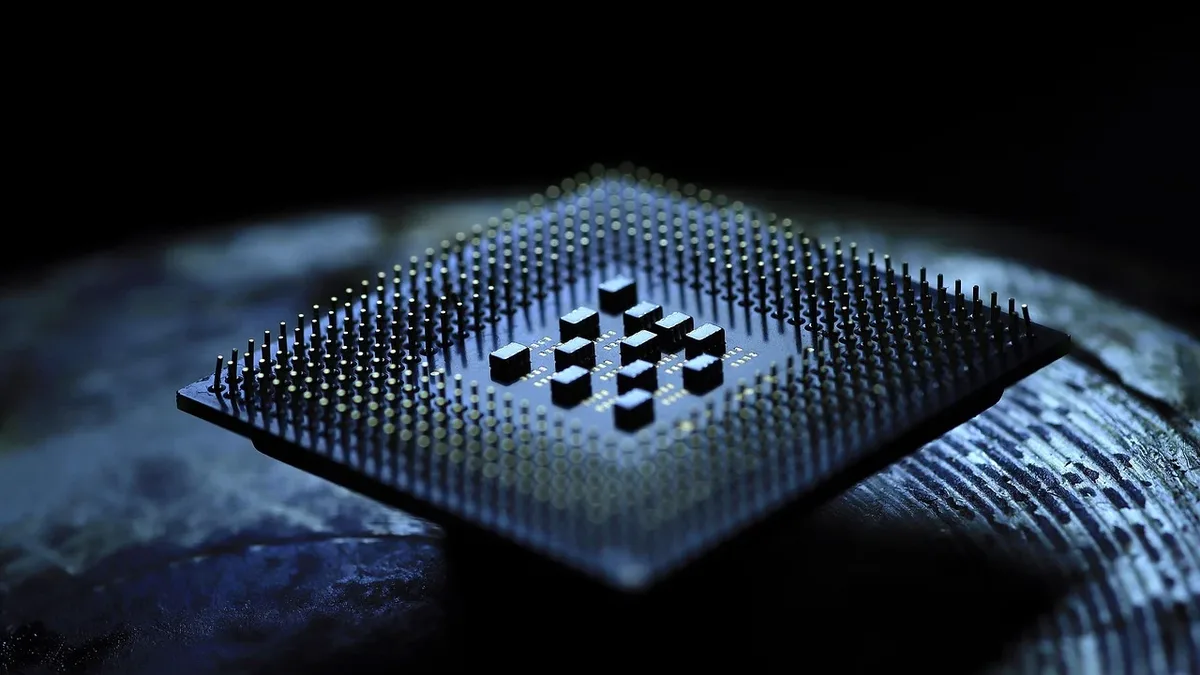
Single-photon skyrmion topology transferred between entangled photons
Researchers used a silicon-nitride photonic chip to transfer the topology of a single-photon quantum skyrmion to an entangled photon pair.

Fundamental Constants Constrain Liquid-Based Life
A theoretical study finds the universe's physical constants must allow liquids to flow for life to exist, while separate research derives Einstein's...

Kinetic Artwork Superposition Visualizes Quantum Strangeness
A kinetic art exhibition at the University of Strathclyde uses 16 spinning aluminium panels to create visual analogies for quantum superposition and...
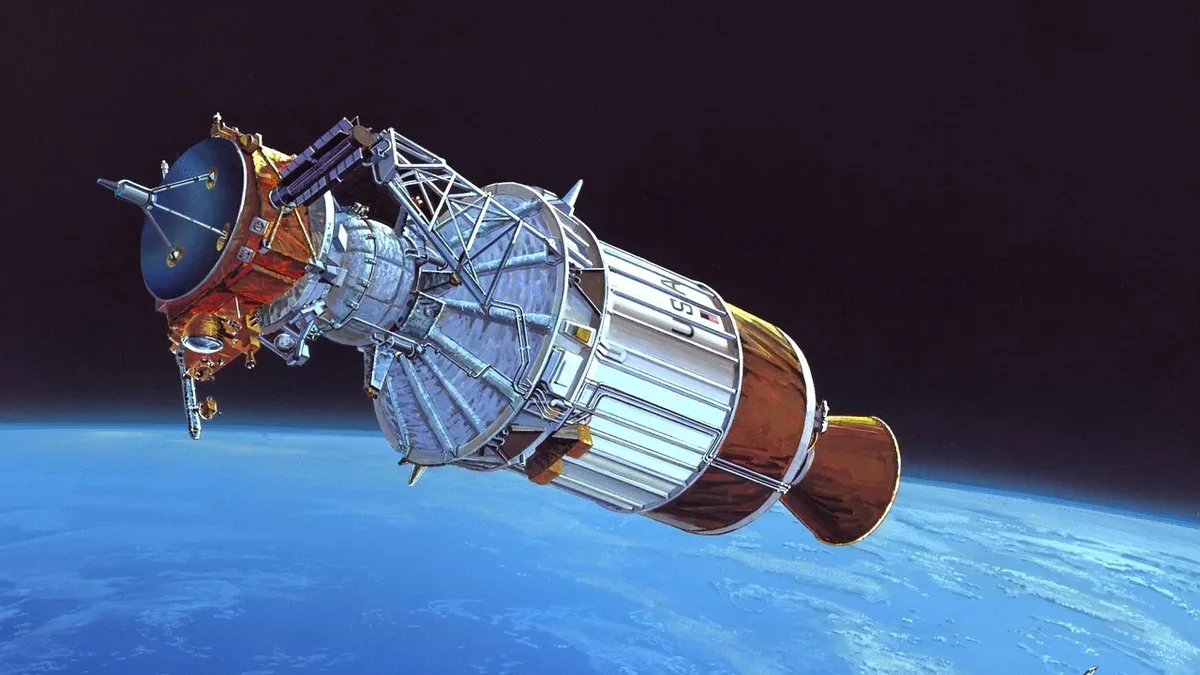
Quantum photonic processor demonstrates two-photon interference in orbit
A quantum photonic processor launched in June 2025 has successfully observed two-photon interference in low Earth orbit.
Independent labs confirm e/4 charge in gallium arsenide
Two independent experiments have measured quasiparticles carrying one-quarter of an electron's charge in the ν = 1/2 fractional quantum Hall state.

Spin Rephasing Stores Single Photons for 180 Microseconds
ICFO researchers stored single photons for up to 180 microseconds using spin rephasing in a praseodymium-doped crystal quantum memory.