Graphene's Floquet State Controlled
Researchers have demonstrated a new method, called harmonic Floquet spectroscopy, to generate and control electrons in a light-dressed Floquet topological insulator.
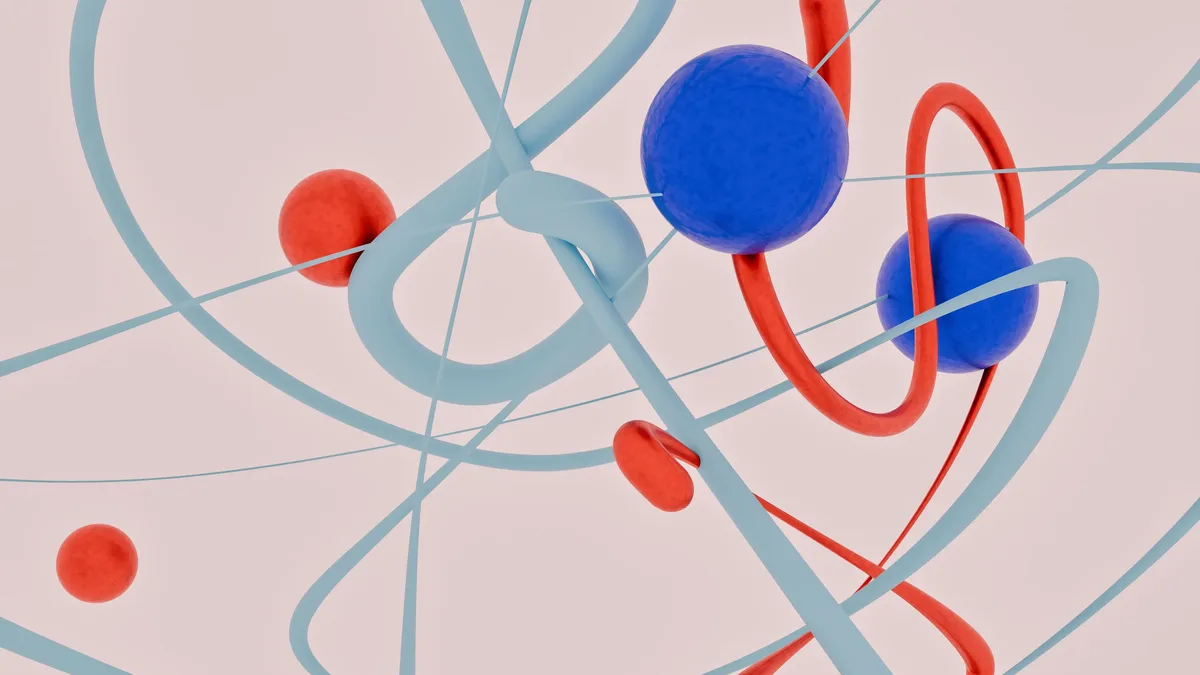
A research team has demonstrated optical control of electrons in a light-dressed state of graphene. They generated a Floquet topological insulator by focusing circularly polarized femtosecond laser pulses at 1,550 nm on monolayer graphene and then used a phase-locked second-harmonic field to dynamically control electrons within it.
According to the source, this technique, termed harmonic Floquet spectroscopy, enables the generation and probing of Floquet topological phenomena using harmonically related optical fields without a direct current field. The work combines the traditionally static picture of a dressed band structure with the sub-optical-cycle micromotion of the Floquet topological insulator state.
FTI State Generation and Probing
To generate the Floquet topological insulator, the researchers optically dressed bare graphene with a circularly polarized fundamental laser field. This opens topological bandgaps within the dressed band structure. A second 'drive' laser pulse, with twice the carrier frequency of the fundamental, then drives coherent ultrafast electron dynamics in this light-dressed state, generating photocurrents.
The source states that the fundamental field's helicity and strength play the dominant role in defining the topological state and Berry curvature of the system. The team's all-optical approach is described as critical for elucidating new phenomena in solid-state Floquet topological insulators.
Experimental Setup and Measurements
The experimental setup used a femtosecond erbium fibre laser. Part of its light was frequency-doubled to form second-harmonic pulses at 775 nm, which were overlapped with the fundamental pulses at 1,550 nm in a stable, collinear setup. The relative phase between the pulses was controlled by calcite wedges.
After polarization control, the pulses were focused onto epitaxial monolayer graphene on silicon carbide. The resulting currents were measured via attached gold electrodes. The fundamental field strength at the sample focus was measured to be 0.27 V nm⁻¹, in the strong-field regime.
The researchers measured optical waveform-dependent photocurrents resulting from the two-colour setup for different ellipticities and relative phases. They observed photocurrent circular dichroism, an all-optical anomalous Hall effect, and valley-polarized currents. The photocurrents showed strong subcycle phase sensitivity, suggesting a route to ultrafast control in topological electronics, spectroscopy and attosecond physics in quantum materials.
Implications and Future Directions
The source suggests this work paves the way to Floquet topotronics and its all-optical implementation. The novel approach enables control and simultaneous analysis of topological and sub-optical-cycle phenomena. It combines the static picture of a dressed band structure with attosecond-scale micromotion.
The technique allows the micromotion of the Floquet state to be directly mapped onto the phase difference between the two light fields. Furthermore, the helicity of the second harmonic can probe the symmetry of the Floquet state, specifically the Berry curvature at harmonic resonances. The source notes that if and how dissipation from graphene to the silicon carbide substrate plays a role must be left to future research. For more details on experimental setups and performance metrics, you can explore our stats and injuries pages.