Kinetic Artwork Superposition Visualizes Quantum Strangeness
A kinetic art exhibition at the University of Strathclyde uses 16 spinning aluminium panels to create visual analogies for quantum superposition and entanglement.
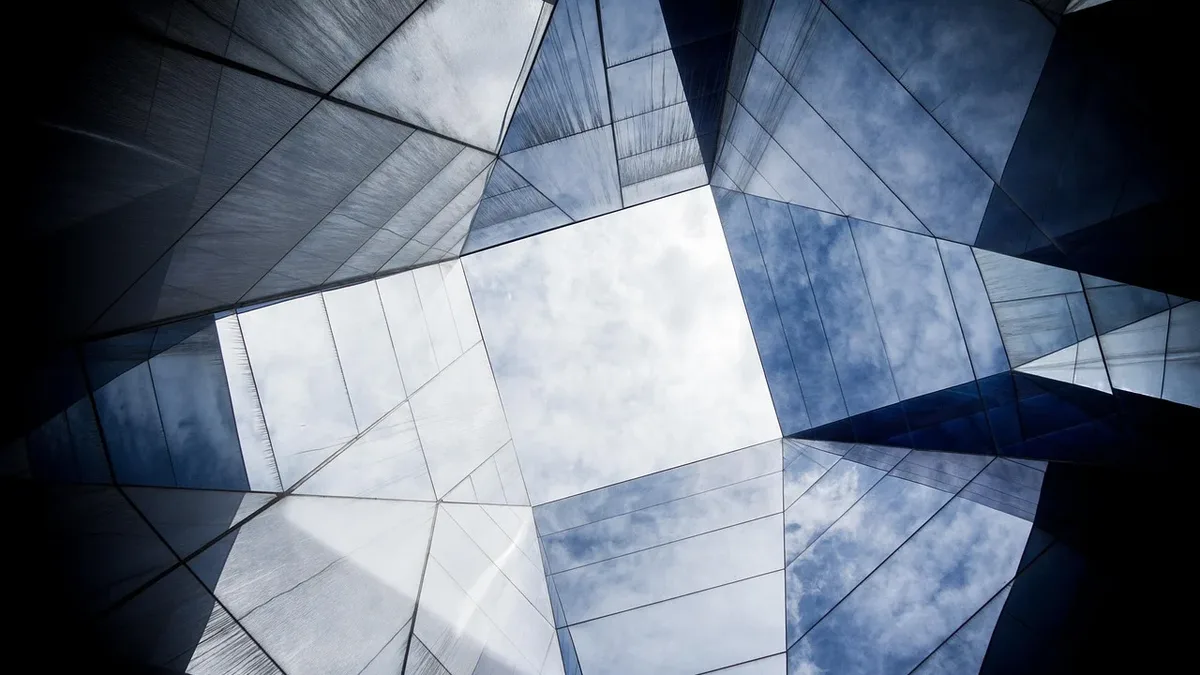
The kinetic art exhibition Superposition opens at the University of Strathclyde’s Technology and Innovation Centre, featuring 16 spinning aluminium panels designed to visualize quantum phenomena. Created by Scottish artist Gregor Harvie, the installation is located in the entrance foyer and will be open on weekdays with free entry from Tuesday, October 20 until October 29. Each panel, drilled with hundreds of holes forming complex patterns, spins at 400 revolutions per minute to transform flat surfaces into shifting, three-dimensional forms that appear to tunnel through space.
Scientific analogy
The artwork uses the behaviour of spinning panels to model superposition and entanglement. The panels are arranged in eight pairs. When the spinning stops, the 3D effect collapses, leaving only a static pattern of holes visible. This stop is an analogy for wavefunction collapse. Over time, seven pairs show the same side as their partner half the time, behaving as statistical probability would predict. The eighth pair behaves differently. Individually, its panels stop randomly, but together they show the same side three-quarters of the time. This anomaly illustrates the principle of quantum entanglement, where the behaviour of two particles remains connected.
Collaboration and context
The piece was developed by Gregor Harvie, who holds a PhD in computational fluid dynamics, in collaboration with the quantum theory group at the University of Glasgow. Professor Stephen Barnett, a professor of theoretical physics at the university, is involved. The exhibition marks the 100th anniversary of the Schrödinger equation, a cornerstone of quantum theory. It is supported by the EPSRC Centre of Doctoral Training in Applied Quantum Technologies, the Scottish Funding Council, and the Institute of Physics. Harvie's previous work, Beyond Absolute Zero, marked the bicentenary of the birth of Lord Kelvin in 2024.
Artist and expert insight
Harvie describes the work as an invitation to experience the quantum universe. "I wanted to make something you could stand in front of and genuinely not know what you are looking at," he said. Professor Stephen Barnett says the artwork allows everyone to experience the 'strangeness' of quantum mechanics and to question what they are seeing. He notes that quantum physics challenges our most basic ideas about what it means for something to have a definite state, revealing a reality stranger than everyday life.
Design and perception
Each panel's design is key to the illusion. One side is white while the other is coloured. As the panels spin at 400rpm, the two sides merge to create a new, symmetrical illusion. The forms change depending on the viewer's position. The stopping positions of the panels are random, reinforcing the quantum analogy. The exhibition offers a rare intersection of science, art, and philosophy, giving visitors a tangible way to engage with foundational quantum concepts. The exhibition remains open on weekdays with free entry until October 29.