Space Station and Lab Tests Confirm Einstein's Equivalence
A quantum test on the China Space Station achieved record precision for the weak equivalence principle, while a separate lab experiment confirmed the
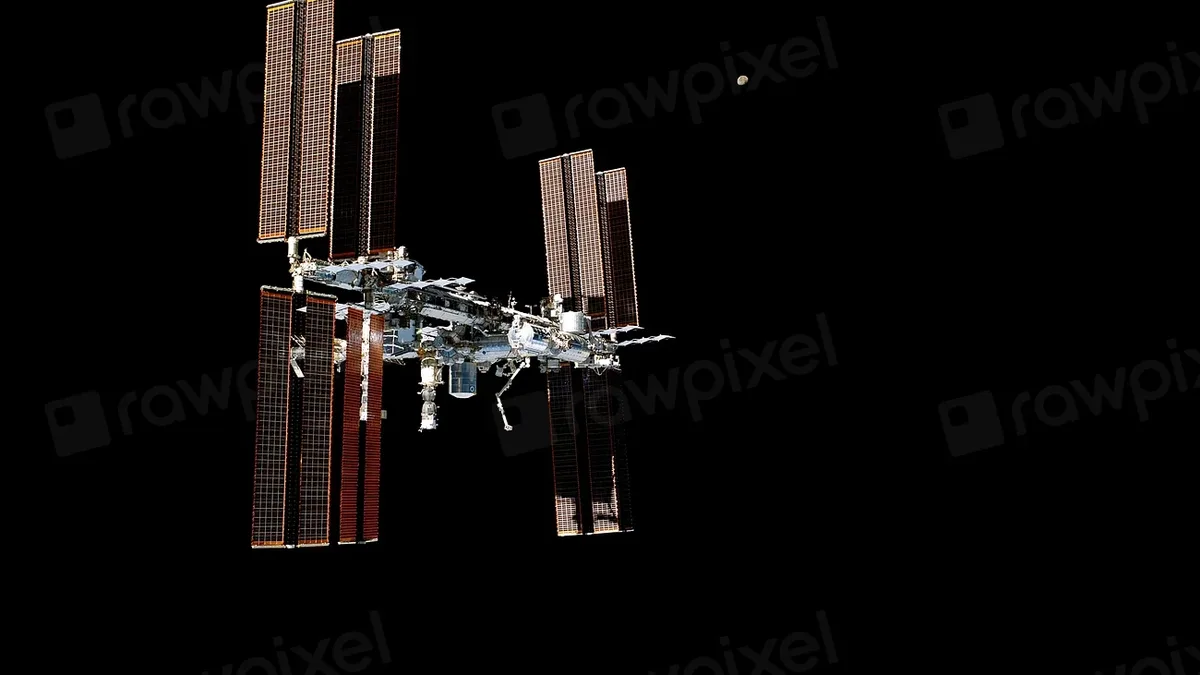
A new quantum test of the weak equivalence principle, conducted on the China Space Station, has achieved the highest precision to date. The experiment yielded an uncertainty of 2.8 x 10^-8 and a test result of approximately -2.7 x 10^-7. Separately, a team from Israel, Germany, and the UK has measured an object's quantum phase during freefall in a laboratory, confirming that Einstein's equivalence principle holds in the quantum realm.
The weak equivalence principle is a cornerstone of Einstein's general theory of relativity. It states that all objects fall with the same acceleration under gravity, irrespective of their mass or composition, when no other forces are present. This principle equates gravitational mass, which responds to gravity, with inertial mass, which resists acceleration. Detecting any violation of this principle could reveal new physics beyond our current understanding.
Precise measurements are key for testing general relativity, which remains incompatible with quantum mechanics. Tests using macroscopic objects have reached extraordinary precision levels. The latest studies push these investigations into the quantum domain.
Record Precision in Space
The space-based experiment was led by Mingsheng Zhan of the Chinese Academy of Sciences. The team used a cold atom interferometer installed on the High Microgravity Level Research Rack of the China Space Station. This instrument manipulates clouds containing billions of rubidium-85 and rubidium-87 atoms.
On Earth, gravity limits interference times to seconds, but the microgravity environment of the space station extends this to minutes. Since test precision scales inversely with the square of the interference time, longer times are essential for achieving higher accuracy. The researchers probed the atom clouds with counterpropagating Raman lasers.
By exciting and detecting fluorescence from the two isotopes at slightly different times, they obtained two sets of symmetric interference images. Measuring the differential phase between these images, after accounting for the space station's residual acceleration and vibrations, allowed them to calculate the difference in acceleration between the two isotopes as they fell.
After 280 days of operation and the acquisition of more than 9,700 pairs of interference fringes, the team obtained their precise result. Mingsheng Zhan stated that the technique demonstrates that an integrated interferometer for in-orbit operation is feasible. He said this gives the community confidence to pursue more demanding space-based experiments and will help advance atom-interferometry-based instruments like inertial navigation systems.
Quantum Phase in Freefall
A separate team from Ben-Gurion University of the Negev, the University of Ulm, and the University of Oxford conducted a laboratory experiment. They used a novel technique called the Quantum Galileo Interferometer to measure an object's quantum phase during freefall, confirming the predictions of Einstein's equivalence principle.
The experiment used clouds of rubidium-87 atoms cooled to just above absolute zero. The researchers placed the atoms near an atom chip and used microwave pulses to put them into a quantum superposition. This meant each atom effectively traveled along two paths simultaneously.
One part of the atomic wave, called the reference wavepacket, was held stationary against Earth's gravity using magnetic fields. The other part was launched upward on a ballistic trajectory using what researcher Ron Folman described as a "magnetic cannon." This part was then switched to a state nearly unaffected by magnetic fields so it could fall freely. A "magnetic parachute" pulse was used to stop its motion and reunite it with the stationary part, allowing them to interfere.
Measuring the Gauge Phase
This interference allowed the measurement of a tiny difference in quantum phase accumulated between the falling wave and the stationary one. These represent an Einsteinian frame (freefalling) and a Newtonian frame (laboratory), respectively. The transformation between these frames involves a gauge phase.
The measured gauge phase matched the prediction derived from applying Einstein's equivalence principle to a quantum wave. This confirms the principle for quantum objects at low masses and energies. Study co-leader Vlatko Vedral called it a fundamental test of the interface between quantum theory and gravity.
Ron Folman noted that some team members, including Nobel laureate Sir Roger Penrose, expect the coexistence between general relativity and quantum mechanics to break down for objects with higher masses. The Ben-Gurion University group is now repeating the experiment using nanodiamond particles to test this hypothesis.