Cascaded Random Access Quantum Memory Demonstrated
Researchers have built an eight-bit cascaded random access quantum memory, a key component absent in current quantum processors.
Researchers have demonstrated an eight-bit cascaded random access quantum memory (CRAQM), a critical component for classical computing that has been notably missing in superconducting quantum processors. According to a paper published in Nature Physics, the architecture uses a single transmon qubit to classically address seven distinct memory modes, introducing a buffer layer to isolate the storage cavity from processor nonlinearities.
This integration of high-coherence memory units is a step toward more resource-efficient control of logical qubits. It allows for the separate optimization of logic and storage subsystems within a quantum computer. The team reports an average infidelity of less than 1.5% per mode for arbitrary random access operations.
Architecture and Isolation
The core innovation is the introduction of a buffer layer between the processor's transmon and a multimode storage cavity. This buffer is important. It isolates the sensitive memory modes from the nonlinearities inherent in the processor's control elements. Without this isolation, the fidelity of the stored quantum information would degrade rapidly.
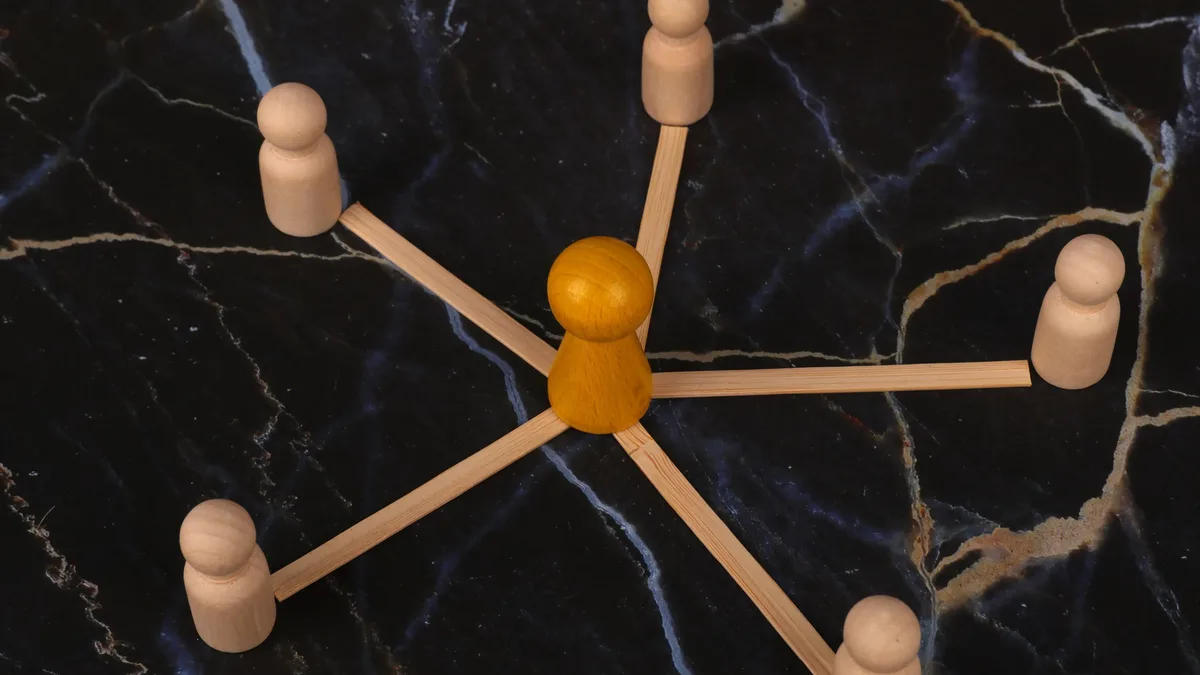
The single transmon acts as a classical address line. It selectively interacts with each of the seven memory modes in the cavity. This cascaded design significantly reduces the number of control lines required per logical qubit, addressing a major scalability challenge in building large-scale quantum computers.
Performance and Error Characterization
The researchers characterized the performance of their memory module by measuring the infidelity of storing and retrieving quantum information. The average infidelity per mode was found to be below 1.5%. The team identified that many-body interactions within the system dominate the error budget. These are complex interactions between multiple modes and the transmon that introduce noise and reduce fidelity.
Understanding these error sources is essential for further improving the memory's performance. The work involved detailed spectroscopy and time-domain measurements to map out these interactions and their impact on the stored quantum states.
Implications for Fault-Tolerant Computing
The cascaded random access quantum memory architecture supports transversal operations within the memory module. Transversal operations are a key requirement for fault-tolerant quantum computing because they limit the spread of errors. By enabling such operations, this memory design establishes a scalable unit cell for future fault-tolerant quantum architectures.
The design promises a significant reduction in the hardware overhead associated with control and wiring. As the paper states, this approach "enables a significant reduction in control lines per logical qubit." This is a practical advance toward building more complex quantum processors where managing thousands of control lines is a formidable engineering challenge.
The work, documented in Nature Physics, provides a blueprint for integrating dynamic random access memory functionality into quantum processors. It marks progress in a field where efficient memory is as important as processing power. The team's analysis of many-body interactions offers a clear path for future refinements to push infidelity rates even lower.