Surface-Attached Molecules Reach Fundamental Quantum Coherence Limit
Scientists at the Max Planck Institute for the Science of Light have, for the first time, achieved the ultimate quantum coherence limit with molecules directly attached to a surface, enabling unprecedented control for quantum technologies.
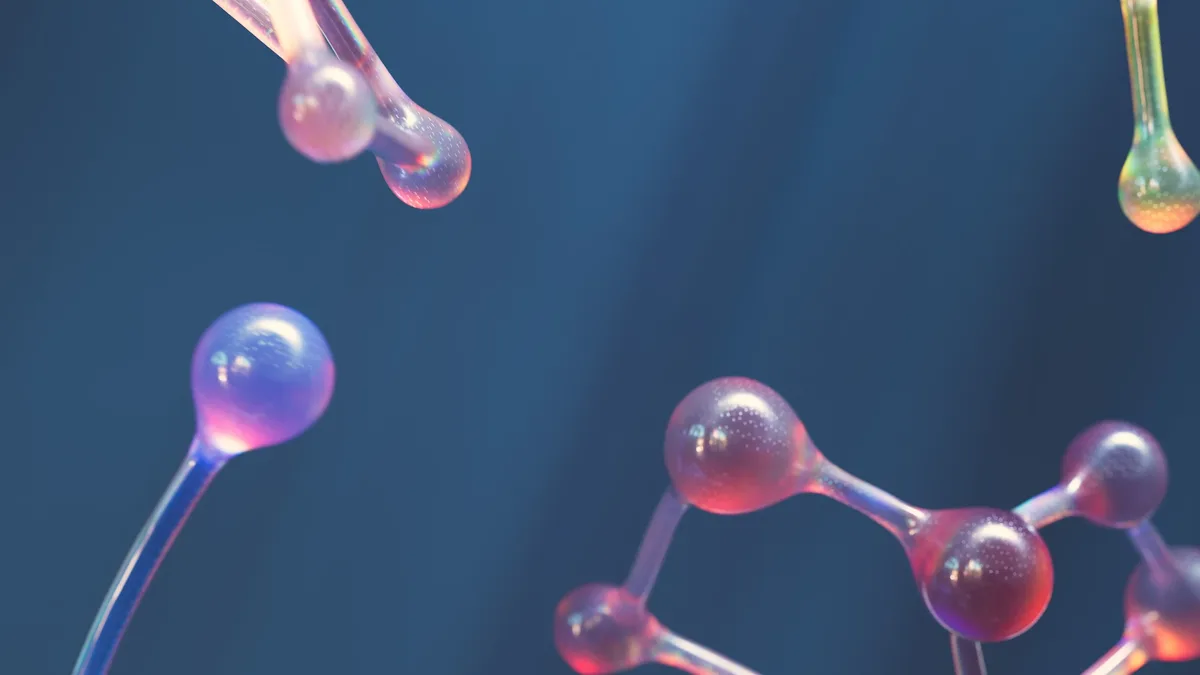
Scientists at the Max Planck Institute for the Science of Light (MPL) have achieved the fundamental quantum coherence limit with molecules directly attached to a surface. This first-of-its-kind breakthrough enables the study of individual quantum emitters on surfaces with unprecedented precision, a key advance for next-generation quantum technologies.
Researchers demonstrated that molecules affixed to a surface can reach the ultimate quantum limit of optical coherence, known as the Fourier limit. This limit is determined by the time required for a quantum emitter to release its energy into its surroundings. Molecules placed on the prepared surface routinely achieved this maximum possible coherence duration. In unstable environments, coherence can diminish hundreds or thousands of times faster than this fundamental limit permits.
Method Enables Unprecedented Precision
Historically, studying quantum emitters required stabilizing them in a vacuum or embedding them in solids. The new approach allows molecules to be placed directly on a surface, where they can be manipulated with scanning tunneling microscopy (STM) and atomic force microscopy (AFM). The breakthrough allows manipulation of individual quantum emitters with precision measured in billionths of a meter. Prof. Vahid Sandoghdar, who led the research, emphasized the potential to combine this method with AFM and STM for localized manipulation of quantum emitters down to billionths of a meter.
Clean Surface Enables Quantum Stability
The research team, which included Dr. Alexey Shkarin, Burak Gurlek, and Johannes Zirkelbach, developed a critical cleaning technique. They used sublimation of organic crystals in a cryostat to remove contaminants from the surface. The crystal was cooled to just a few degrees Kelvin above absolute zero to halt sublimation and stabilize the ultra-clean surface. Molecules were then deposited onto this pristine surface using a tiny, specially fabricated oven.
This clean environment was essential for reaching the Fourier limit. Dr. Alexey Shkarin noted, "The quality of quantum emitters can be evaluated by their coherence times, which indicate how long they keep their quantumness." Subsequent experiments showed the crystal surface could align molecules, alter their energy levels, and modify their shapes or vibrational patterns. The work paves the way for future integration of this coherence method with AFM and STM tools for highly localized quantum emitter manipulation.