JUNO experiment nears answer to neutrino mass ordering mystery
A new theory proposes a heavy neutrino that shaped the early universe, while the JUNO detector in China gathers data poised to test this idea and determine the fundamental neutrino mass hierarchy.
A new study proposes a heavy neutrino that temporarily dominated the early universe, potentially resolving the profound matter-antimatter imbalance. The JUNO experiment, located 700 metres underground in southern China, is designed to resolve the neutrino mass ordering by detecting antineutrinos from nearby nuclear reactors, and its data could test this novel cosmological mechanism.
A decoupled heavy neutrino is a hypothetical particle, a heavy relative of ordinary neutrinos, previously considered an irrelevant background detail. According to the theory, this heavy neutrino decayed very slowly after the Big Bang and lived long enough to temporarily take over the energy density of the universe. This temporary dominance triggered a matter-dominated period in the early cosmos. The neutrino shifted the temperature at which particles interacted with their antiparticles via the Standard Model Higgs boson, acting as a switch for matter-antimatter imbalance. The increased temperature allowed some matter particles to remain after all antimatter was annihilated. The theory. Rishav Roshan of the University of Southampton, suggests the heavy neutrino could provide a firm solution to the mystery of why we exist. The concept could also change the fundamental understanding of how the early universe expanded so quickly after the Big Bang.
JUNO experiment poised to test the theory
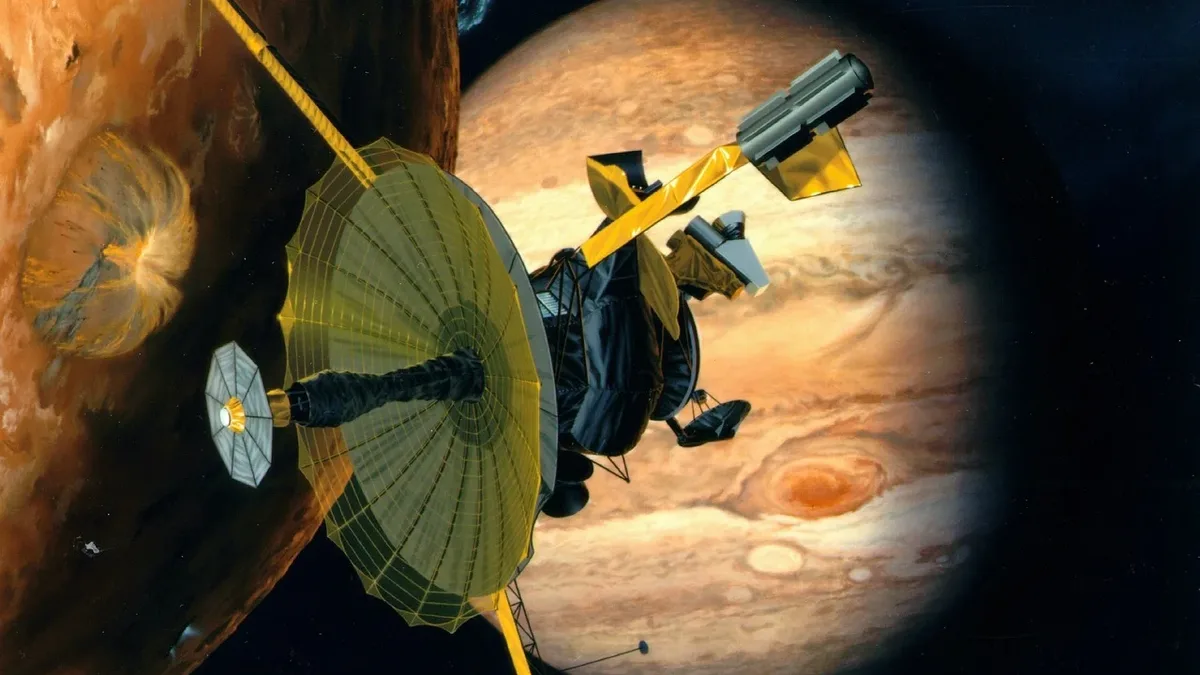
The JUNO detector, deep underground, will search for signatures that could confirm or refute the proposed mechanism. The detector contains a 20,000-tonne acrylic sphere filled with scintillator fluid and is positioned 53 kilometres from the Yangjiang and Taishan nuclear power plants. Access involves a funicular railway descent taking nearly a quarter of an hour through a tunnel bored in solid granite; the cavern housing the detector could swallow a 14-storey building.
JUNO's 30-year planned lifetime is intended to capture rare supernova neutrino events from a galactic star explosion. The theory predicts detectable imprints on primordial gravitational waves, which could open new avenues for studying the early universe. The JUNO Collaboration published initial results in June indicating a preference for the normal mass ordering. The team's paper on the heavy neutrino scenario was published in Physical Review Letters.
Context from historic solar neutrino discovery
The long-standing solar neutrino deficit first revealed neutrino flavour change, setting the stage for today’s mass ordering quest. In the late 1960s, Raymond Davis Jr. used a chlorine-containing cleaning fluid in a tank at a South Dakota gold mine to detect solar neutrinos. He observed that about two-thirds of expected solar neutrinos were missing, a puzzle later explained by neutrino flavour change.
There are three neutrino flavours: electron, muon, and tau. Neutrino oscillation occurs because the three flavours correspond to three mass states, which are quantum mixtures of all flavours. Neutrino masses are extraordinarily small, with a mass disparity between an electron and a neutrino comparable to a fully loaded station wagon versus a single playing card. Neutrino oscillation was discovered around the year 2000. André de Gouvêa noted, "This was an absolutely gigantic discovery that had been building up for a long time." Neutrino mass may arise via the seesaw mechanism, involving hypothetical extremely heavy neutrinos, or from interactions with undiscovered particles possibly linked to dark matter.
Broader implications for cosmology and future experiments
Neutrino properties may address cosmological tensions and matter-antimatter asymmetry, linking JUNO results to larger projects. Cosmologist William Giarè states that neutrino properties can help address tensions in cosmological models, such as the distribution of matter and dark energy. The Big Bang should have produced nearly equal amounts of matter and antimatter, but the universe contains far more matter than antimatter. Explaining this asymmetry remains one of the greatest unanswered questions in modern physics.
Silvia Pascoli said: "Neutrino mass provides us with the only particle physics evidence that the standard model of particle physics is incomplete." Major upcoming experiments will build on JUNO's work. Both Hyper-Kamiokande in Japan, scheduled to start operations next year, and DUNE in the US, expected to open in the early 2030s, will study whether neutrinos and antineutrinos behave differently. The physics community now awaits JUNO’s upcoming data to reveal whether the heavy neutrino scenario is correct.