Magic-Angle Graphene Detects Faint IR Light
A study published in Nature Communications on August 31, 2026, shows that faint far-infrared light can switch magic-angle twisted bilayer graphene from an insulator to a metal.
A faint beam of far-infrared light can melt a fragile insulating state in a quantum material, turning it into a metal. This discovery, reported in Nature Communications on August 31, 2026, by researchers at the National University of Singapore, establishes magic-angle twisted bilayer graphene as a potential platform for ultrasensitive radiation detection.
Phase transitions are central to physics. Common examples like water freezing involve atoms rearranging. In quantum materials, however, it is the collective state of electrons that changes. Superconductivity is a famous electronic phase transition, prized for its sensitivity. The new work shows that a different fragile state, a correlated insulator, shares this extreme responsiveness.
The Magic-Angle Material
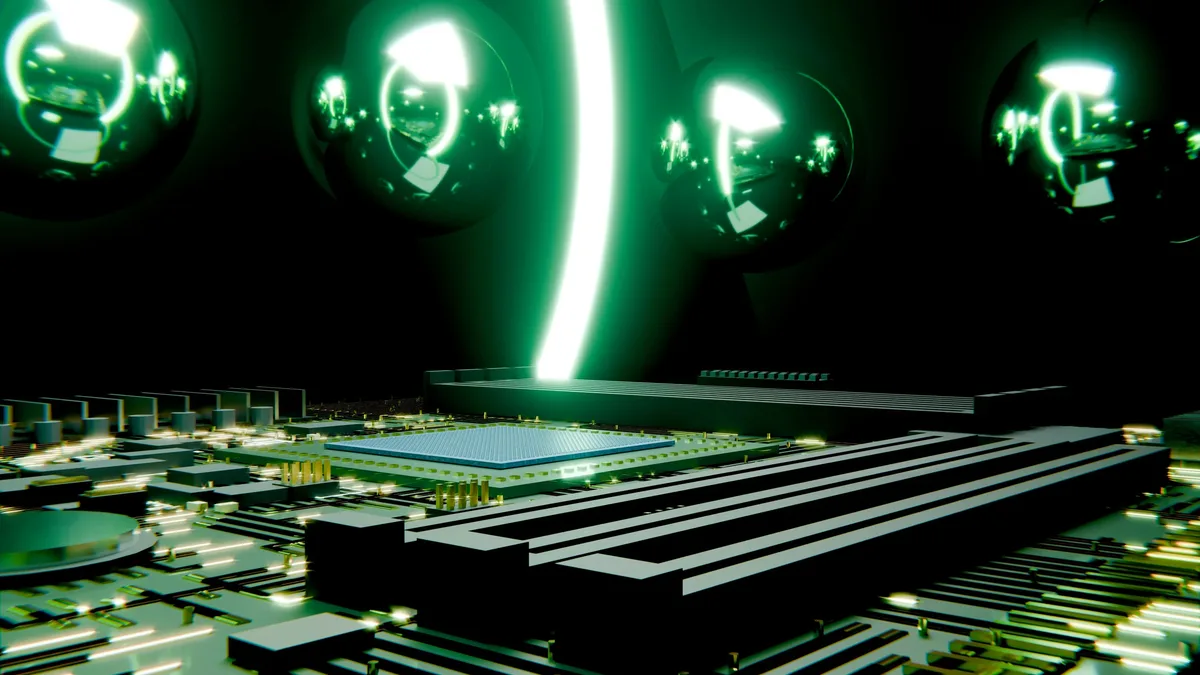
The experiment used magic-angle twisted bilayer graphene (MATBG). This material is created by stacking two atom-thin sheets of graphene and twisting one relative to the other by about one degree. At this precise angle, the electronic bands become very flat. This dramatically enhances interactions between electrons, allowing them to form collective quantum states.
One such state is a correlated insulator, where strong electron interactions suppress electrical conduction. The insulating state is delicate. According to the study's lead author, Leonid Elesin, even a slight increase in electron temperature is enough to 'melt' it.
A Light-Switch for Electrons
The researchers exposed their MATBG sample to far-infrared (FIR) radiation. This band of light lies between microwaves and visible light on the electromagnetic spectrum. It is notoriously difficult to work with. The team found that even very low radiation intensities triggered a transition.
The absorbed radiation heated the electrons while the crystal lattice stayed cold. This slight electronic heating was sufficient to destroy the correlated insulator. The material switched to a metallic state where electrons could flow freely. The transition itself acts as a sensitive switch.
Implications for Detection
The far-infrared range is crucial for several technologies. It is used in medical diagnostics, security screening, and observational astronomy. Progress in these fields is limited by a lack of fast, sensitive detectors. The new finding suggests a path forward.
'Our results establish magic-angle graphene as a new platform for exactly that,' the researchers state in their Science X Dialog article. The material's insulating state can be switched on and off with an electrical gate voltage. A whisper of FIR light can then flip the electronic switch from insulator to metal.
This makes MATBG a candidate for a new type of bolometer-a device that measures radiant heat. The extreme sensitivity stems from the phase transition's nature. Near the transition point, a tiny stimulus produces a dramatic change. Watching the correlated state dissolve under faint light offers a new window into collective electron behavior.
The study was conducted at the CMX lab at the National University of Singapore and published under the title 'Correlated insulator Moiré bolometer.'