Magic-angle graphene superconductivity
Researchers from the University of Manchester have completely suppressed superconductivity in magic-angle graphene by screening electron-electron
Scientists have completely switched off superconductivity in magic-angle graphene by screening the interactions between electrons. The experiment, led by researchers from the University of Manchester's National Graphene Institute, provides the clearest evidence yet that the phenomenon in this material is driven by strong electron-electron correlations rather than conventional atomic lattice vibrations.
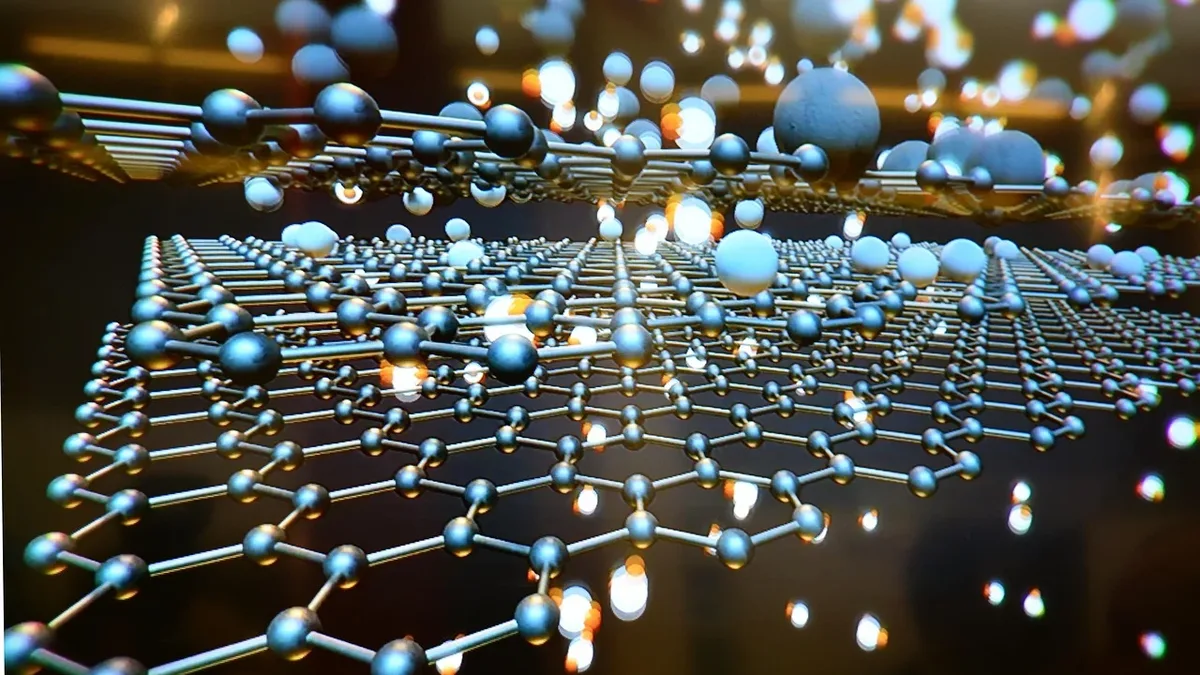
This finding addresses a central debate that has persisted since superconductivity was first discovered in the material. Magic-angle twisted bilayer graphene is created by stacking two atom-thin sheets of carbon with a precise rotational offset of about 1.1 degrees. While it has been a focal point of quantum materials research for a decade, the fundamental cause of its superconductivity remained contested.
A device for unprecedented screening
The team built a novel device featuring two twisted graphene bilayers separated by less than a nanometer while remaining electronically isolated. Dr. Julien Barrier, the study's lead author, explained the design challenge. "To make a difference, we had to solve two issues," he said. "First, to build a device in which the screening layer sits extremely close-a fraction of a nanometer-from the superconducting graphene while remaining electronically separate. Second, we had to make that screening layer tunable."
The researchers used a second twisted graphene bilayer in atomic contact with the magic-angle layer to achieve this tunable, ultra-close screening. Professor Alexey Berdyugin from the National University of Singapore, the corresponding author, described the result. "When we switched on the screening, we were surprised to find that superconductivity was completely suppressed," he said.
Screening erases quantum states
By increasing the carrier density in the neighboring screening layer, the team progressively weakened and then fully suppressed superconductivity in the magic-angle graphene. The superconducting critical temperature was reduced by more than an order of magnitude. Correlated insulating states, another hallmark of the material's quantum behavior, also vanished under the same conditions.
The effect was far stronger than in prior screening experiments. The researchers attribute this to the exceptionally short, 0.3-nanometer separation between the layers, which allowed for unprecedented modification of the Coulomb interactions between electrons.
Tightening constraints on theory
The experimental outcome directly challenges conventional theories of superconductivity. In standard phonon-mediated superconductivity, screening Coulomb interactions would typically leave superconductivity unchanged or even enhance it. The observed complete suppression points decisively toward an unconventional mechanism rooted in electron interactions.
While the study does not pinpoint a single definitive pairing mechanism, it rigorously narrows the field of viable theories. Several models based on collective electronic interactions remain consistent with the data. Professor Sir Andre Geim, a corresponding author on the work, framed the research in a broader context. "Personally, I am interested only in high-temperature superconductivity-preferably at room temperature or above," he noted. "This study was done at temperatures so low that even helium turns liquid."
He added that the work represents a step toward that ultimate goal by helping to nail down the mechanism of exotic superconductivity in graphene. The team anticipates that their method of achieving short-range screening could also help clarify other debated quantum phenomena in strongly correlated materials.