Quantum photonic processor demonstrates
A quantum photonic processor launched in June 2025 has successfully observed two-photon interference in low Earth orbit, proving the feasibility of
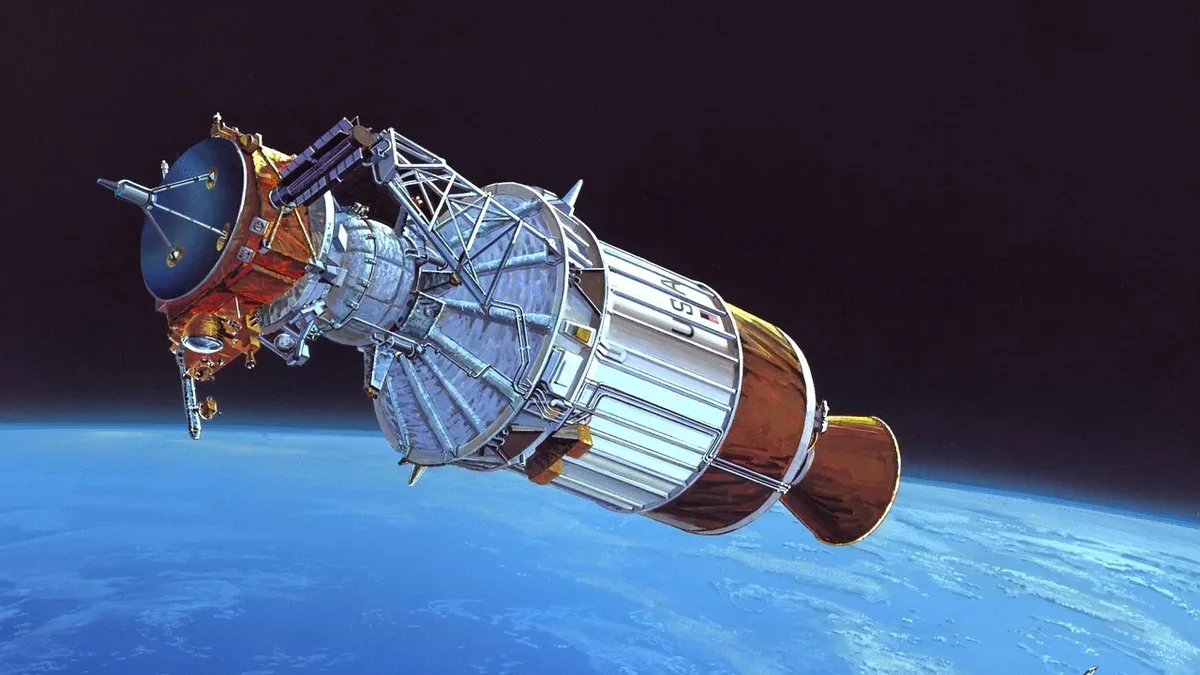
A quantum photonic processor has successfully generated, manipulated, and detected photon pairs in low Earth orbit, observing two-photon interference despite harsh orbital conditions. The system performed several different programmed operations over its first eight months in space, launching aboard a SpaceX Falcon 9 rocket on June 23, 2025.
Quantum interference was demonstrated via the Hong-Ou-Mandel effect, where indistinguishable photons bunch at a beam splitter. The Hong-Ou-Mandel dip was observed when photon wavelengths were tuned via temperature adjustment of the crystal source. The sweet spot for indistinguishability occurred at approximately 32.5 degrees Celsius, matching pre-launch Earth-based predictions.
At this temperature, the visibility of the Hong-Ou-Mandel dip was measured at 0.908, above the classical limit of 0.5. The result exceeded the classical threshold by 2.14 standard deviations, despite measurement uncertainty. The dip was reproduced on two separate days and disappeared when the processor was reconfigured to a non-interfering state. This confirmed non-classical interference in space, validating core principles of photonic quantum computing under orbital stress.
System overcomes launch and radiation challenges
Despite half the detectors failing, laser degradation from outgassing, radiation damage, and solar background limiting operations to eclipse periods, the system maintained functionality. The processor was launched into an orbit at approximately 510 kilometers altitude. The rocket launch subjected the instrument to shock-response requirements of up to 1,500 times Earth's gravity at resonant frequencies.
The instrument initially had six silicon single-photon avalanche diodes, but only three were functional after launch. Solar background noise overwhelmed measurements in sunlight, limiting sensitive operations to the roughly 30 minutes per 92-minute orbit spent in Earth's shadow. The payload was shielded with a centimeter-thick layer of aerospace-grade aluminum to mitigate radiation from the Van Allen belts.
After 52 days in orbit, the dark count rate of the surviving detectors increased due to proton radiation damage. Researchers compensated by adjusting detector voltages. The commercial laser used gold-plated Kovar housing but contained an adhesive that outgassed in vacuum, depositing a carbon-rich film on optics. Laser output declined from approximately 20 milliwatts to 4 milliwatts over one week. The laser could not be replaced or cleaned after integration, and its output continued to decline in orbit.
Processor validates space-based quantum hardware concept
The mission confirms the feasibility of photonic quantum processing in orbit as a step toward in situ data processing and future quantum network nodes. It aimed to process satellite data in situ to overcome bandwidth bottlenecks in downlinking raw data. The quantum processor was developed by a team led by Philip Walther of the University of Vienna.
The processor uses photons to carry quantum information via a photonic chip with paired photon sources and optical pathways. It consisted of a photon-pair source, a six-mode integrated glass circuit chip, single-photon detectors, and control electronics. It cannot yet process satellite data but serves as a testbed for future robust space-based quantum hardware. The researchers envision orbiting quantum processors as nodes in a global quantum network linked with ground-based quantum communication channels.
Results published as arXiv preprint
The findings were shared in a preprint led by Simon Steiner and colleagues. The paper detailing the results is available on arXiv and has not yet been peer-reviewed. The study was published with the DOI 10.48550/arxiv.2609.25248.
The next step is to close the loop between sensor and processor. Simon Steiner et al. Said: "The next step is to close the loop between sensor and processor, encoding Earth-observation data directly into the unitary programmed on the circuit."