Albert Einstein
| Concept | Special Relativity |
|---|---|
| Experiment/Observation Tested | Michelson–Morley experiment (1887) |
| Original use | Theoretical explanation of physical phenomena |
| Country of origin | Germany |
| First created | Early 20th century |
Origin and history
Albert Einstein was born in Ulm, in the Kingdom of Württemberg within the German Empire, in the late nineteenth century. The year 1905, known as his "annus mirabilis" or miracle year, saw him publish four groundbreaking papers while working as a patent clerk in Bern, Switzerland. These papers addressed the photoelectric effect, Brownian motion, and introduced the special theory of relativity. His general theory of relativity, which redefined gravity, was published in its complete form in the mid-1910s. Einstein emigrated to the United States in the 1930s following the rise of the Nazi regime in Germany and spent the remainder of his career at the Institute for Advanced Study in Princeton.
What it is for
Einstein's theories provide the conceptual framework for understanding the fundamental structure of space, time, and gravity. Special relativity is used for analyzing physical systems where objects move at very high speeds, close to the speed of light, and it establishes the equivalence of mass and energy. General relativity describes gravity not as a force but as a consequence of the curvature of spacetime caused by mass and energy. These theories are essential for the accurate operation of technologies like the Global Positioning System (GPS), which must account for relativistic time dilation. In cosmology, general relativity is the foundation for models of the expanding universe, black holes, and gravitational waves. The photoelectric effect theory, for which he won the Nobel Prize, established the quantum nature of light and is fundamental to devices like photovoltaic solar cells.
Pros and cons
However, a significant con is that general relativity is conceptually and mathematically complex, requiring advanced tensor calculus and non-Euclidean geometry that are inaccessible without specialized training. Practitioners often regret applying relativistic corrections in inappropriate contexts, such as attempting to use them for everyday engineering problems where classical Newtonian physics is perfectly sufficient and far simpler. A common mistake is the oversimplification or misapplication of the mass-energy equivalence formula (E=mc²), frequently misinterpreted to imply that mass can be freely converted into usable energy without considering the specific nuclear reactions involved. Furthermore, a major theoretical challenge is the persistent incompatibility between general relativity, which describes the universe at large scales, and quantum mechanics, which governs the subatomic world. This divide means physicists lack a complete framework for singularities like those at the center of black holes or the universe's origin.
Who it suits
Einstein's work suits theoretical physicists and cosmologists seeking a comprehensive description of gravitational phenomena and the large-scale universe. It is essential for astronomers and astrophysicists studying compact objects like neutron stars, black holes, and the evolution of galaxies. Aerospace engineers and technologists working on deep-space navigation or satellite-based systems like GPS must understand and apply relativistic principles for precision. The theories also suit philosophers of science interested in the nature of space, time, and causality due to their profound implications for these concepts. Students embarking on advanced degrees in physics will encounter relativity as a core component of their curriculum, though it requires a strong foundation in classical mechanics and electromagnetism. It does not suit individuals seeking intuitive, everyday explanations for gravity, as the concepts often defy common sensory experience and require abstract mathematical thinking.
Latest Albert Einstein news
Latest reporting
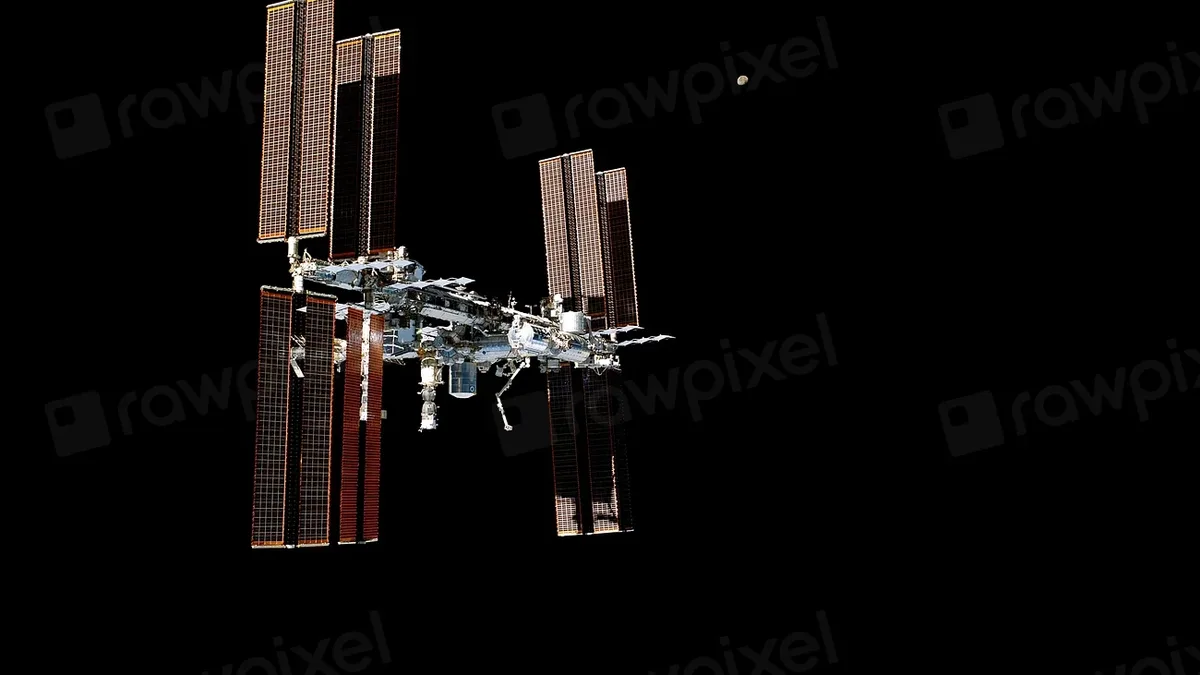
Space Station and Lab Tests Confirm Einstein's Equivalence
A quantum test on the China Space Station achieved record precision for the weak equivalence principle, while a separate lab experiment confirmed the
Ultra-High-Energy Photon Defies Physics to Reach Earth
A 300 TeV photon from a distant gamma-ray burst survived a 2-billion-light-year journey that should have destroyed it, challenging Einstein's...
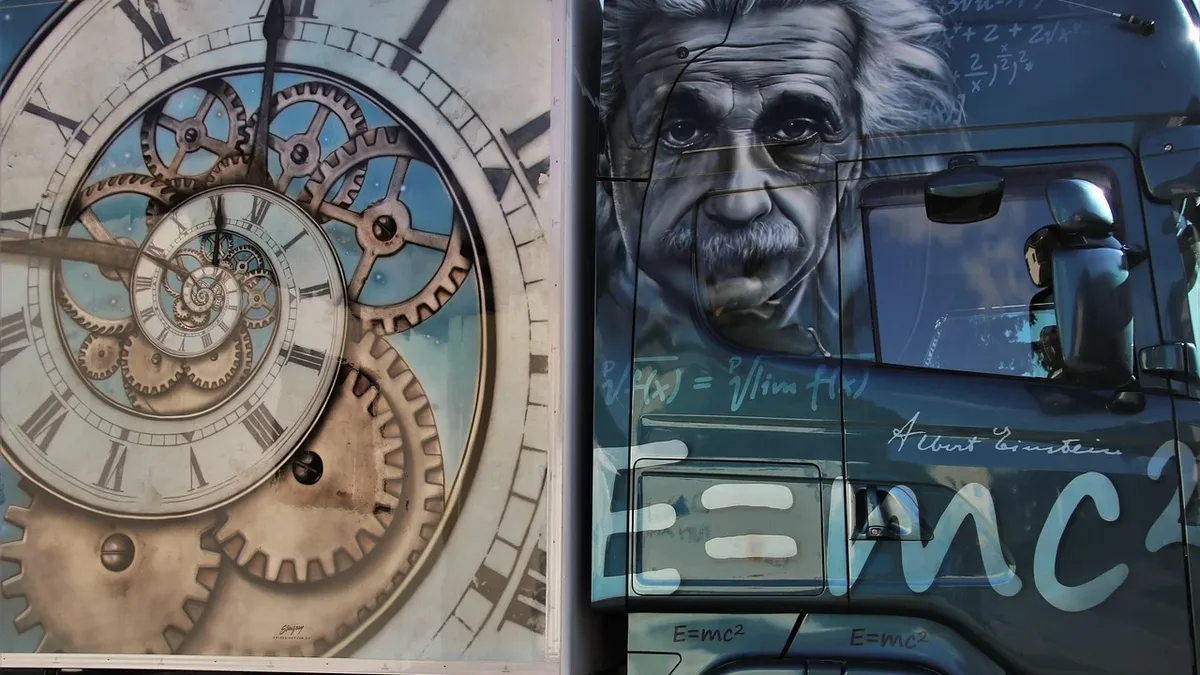
Einstein's Time Dilation: Real and Apparent
Marco Giovanelli, a historian at the University of Turin, argues Einstein viewed time dilation as both real and apparent.

Einstein's Abandoned Cosmological Constant Makes a Comeback in Cosmology
A century-old concept, once dismissed by Einstein, has been revived to explain the accelerating expansion of the universe.