Angle Resolved Photoemission
| Concept | Electronic band structure of solids |
|---|---|
| Observation | Energy and momentum of photoelectrons emitted from a sample |
| First created | 1970s (technique development) |
| Core measurement | Electron kinetic energy and emission angle |
| Typical light source | Synchrotron radiation or laboratory UV lasers |
| Primary data output | Intensity maps as function of energy and momentum |
| Typical sample environment | Ultra-high vacuum |
Origin and history
Angle Resolved Photoemission Spectroscopy (ARPES) originated as a specialized experimental technique in the field of condensed matter physics, primarily developed in the United States and Western Europe during the 1960s and 1970s. Its foundational principles are deeply rooted in the photoelectric effect, explained by Albert Einstein in 1905, which describes the emission of electrons from a material upon illumination with light. The critical innovation was the addition of angular resolution to measure the direction of emitted photoelectrons, not just their kinetic energy. This development was enabled by advances in ultra-high vacuum technology and the availability of bright, tunable light sources from synchrotrons. Early pioneering work was conducted by groups at Bell Labs in the United States and at several European institutions, who recognized its potential for probing electronic states in solids. The technique evolved from a qualitative tool to a highly quantitative one with the advent of sophisticated electron energy analyzers and the use of low-energy photons from synchrotron radiation facilities.
What it is for
Angle Resolved Photoemission Spectroscopy is used to experimentally determine the electronic band structure of crystalline materials. Its primary purpose is to measure the relationship between the energy and momentum of electrons within a solid, which is a fundamental property governing electrical conductivity, optical response, and magnetic behavior. Researchers employ ARPES to directly visualize the allowed energy levels (bands) that electrons can occupy and, crucially, the forbidden energy ranges (band gaps). It is the leading experimental technique for studying complex phenomena like superconductivity, topological insulator states, and charge density waves by mapping their characteristic signatures in electronic structure. The method is indispensable for testing theoretical predictions from computational models like density functional theory by providing direct experimental data on electron energies and lifetimes. Furthermore, ARPES can probe how electronic states change at material surfaces or interfaces, which often exhibit properties distinct from the bulk.
Pros and cons
It offers exceptional sensitivity to surface electronic properties, which is beneficial for studying two-dimensional materials and surface reconstructions. The technique is also highly versatile, especially when paired with synchrotron light sources, allowing tuning of photon energy for probing different depths or enhancing specific emission features. However, a significant con is its extreme surface sensitivity; since photoelectrons originate from only the top few atomic layers, the data may not represent the true bulk electronic structure of a material, leading to misinterpretation. The requirement for atomically clean and flat surfaces under ultra-high vacuum makes sample preparation arduous and limits the study of air-sensitive or complex heterostructures. Researchers often regret the immense cost and limited access to high-resolution instruments, particularly at synchrotron beamlines, where experiment time is highly competitive and scheduled months in advance.
Who it suits
This technique suits condensed matter physicists and materials scientists whose research focuses on the fundamental electronic properties of crystalline solids, particularly those investigating quantum materials like high-temperature superconductors, topological insulators, and two-dimensional semiconductors. It is ideal for research groups with strong expertise in ultra-high vacuum systems, surface science, and the interpretation of complex spectroscopic data, often within academic institutions or national laboratories. ARPES is a core tool for theorists who require precise experimental validation of their electronic structure calculations, fostering close collaboration between experimental and theoretical teams. The technique is less suited for chemists or engineers focused on bulk material properties, device performance, or operational stability under ambient conditions, as the measurement environment is far from practical applications. It also requires significant technical investment, making it a poor fit for small laboratories without dedicated funding or access to central synchrotron facilities.
Latest Angle Resolved Photoemission news
Latest reporting
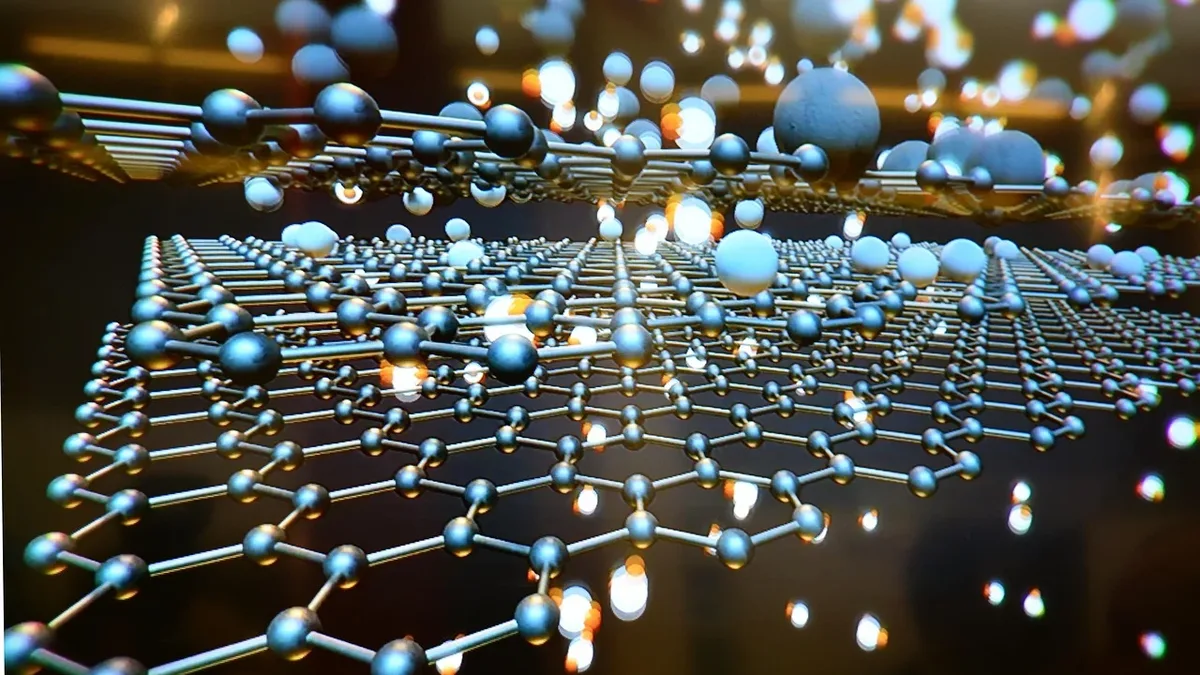
Magic-angle graphene superconductivity
Researchers from the University of Manchester have completely suppressed superconductivity in magic-angle graphene by screening electron-electron
Magic-Angle Graphene Detects Faint IR Light
A study published in Nature Communications on August 31, 2026, shows that faint far-infrared radiation can switch magic-angle twisted bilayer...