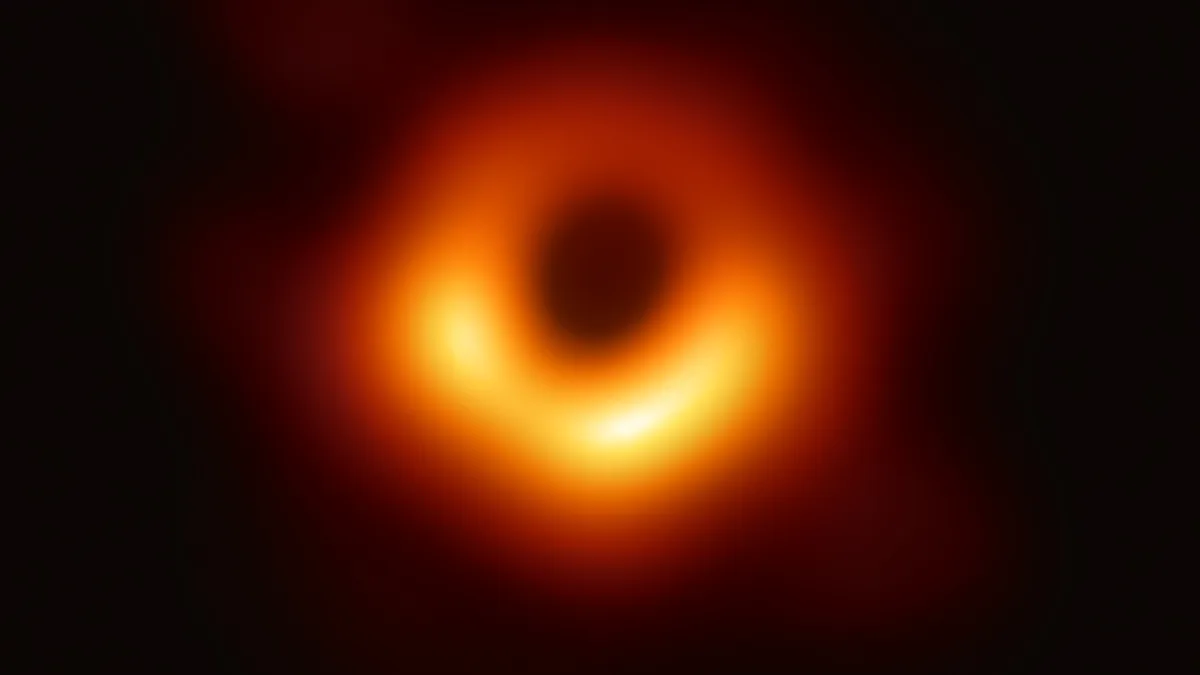
Black Hole Thermodynamics And The Information Paradox
| Original concept | Black hole thermodynamics |
|---|---|
| First documented | 1970s |
| Original use | Theoretical framework linking general relativity, quantum mechanics, and thermodynamics |
| Key theoretical prediction | Hawking radiation |
| Key paradox | Black hole information paradox |
| Primary test approach | Gravitational wave astronomy (e.g., LIGO/Virgo observations) |
| Secondary test approach | Event Horizon Telescope (e.g., M87* and Sgr A* imaging) |
Origin and history
The conceptual foundations of black hole thermodynamics were developed in the early 1970s, primarily from work by physicists in the United States and the United Kingdom. Jacob Bekenstein, then in the United States, proposed in the early 1970s that black holes must possess entropy proportional to the area of their event horizon. This was a radical suggestion, as it linked thermodynamics, information theory, and gravity. Shortly thereafter, Stephen Hawking in the United Kingdom applied quantum field theory to black holes and discovered they should emit thermal radiation, a process now called Hawking radiation, which cemented the thermodynamic analogy. The information paradox arose directly from Hawking's calculation in the mid-1970s, as the emitted radiation appeared to be purely thermal and devoid of any information about what fell in. This initiated a decades-long debate in theoretical physics about the fate of quantum information, a debate that remains unresolved and is central to the search for a theory of quantum gravity.
What it is for
Black hole thermodynamics provides a formal bridge between the classical laws of gravity, as described by general relativity, and the laws of thermodynamics and quantum mechanics. It serves as a crucial theoretical testing ground for ideas in quantum gravity, such as string theory and loop quantum gravity. The framework is used to probe the fundamental nature of spacetime, suggesting that macroscopic properties like entropy and temperature may emerge from microscopic quantum degrees of freedom. The information paradox, as a specific component, is used to stress-test the consistency of quantum mechanics in the presence of strong gravitational fields. Its primary purpose is to identify and highlight a profound conflict between bedrock principles of modern physics, thereby guiding research toward a more complete theory. Resolving the paradox is considered a prerequisite for any viable theory that unifies quantum mechanics and general relativity.
Overview
Black hole thermodynamics assigns thermodynamic properties to black holes: temperature, entropy, and internal energy. The temperature is inversely proportional to the black hole's mass, and the entropy is proportional to the area of its event horizon. Hawking radiation is the quantum process by which black holes slowly evaporate, losing mass and eventually, in theory, disappearing entirely. The information paradox states that if the Hawking radiation is purely thermal and random, then the information describing the quantum states of matter that formed the black hole is permanently lost when the black hole evaporates. This violates the quantum mechanical principle of unitarity, which demands that information is preserved and evolution is reversible. The paradox thus presents a stark choice: either quantum mechanics fails in gravitational contexts, or our understanding of black hole evaporation is incomplete.
What to know
The entropy of a black hole, the Bekenstein-Hawking entropy, is enormous and counts the number of microscopic quantum states associated with the event horizon. Hawking radiation is not emitted from the event horizon itself but arises from quantum effects in the curved spacetime just outside it. The paradox is not about retrieving information for practical use but about the fundamental consistency of physical laws. Proposed resolutions often involve modifications to one or more assumptions, such as the existence of long-lived remnants, a fundamental change to quantum mechanics, or the idea that information slowly leaks out during evaporation. The holographic principle, which suggests all information within a volume is encoded on its boundary, emerged directly from the study of black hole entropy. It is widely accepted that resolving the paradox will require a theory of quantum gravity, making it one of the most important open problems in theoretical physics.
Common questions
A common question is whether information loss has been observed, but no, the paradox is currently a theoretical one, as Hawking radiation from astrophysical black holes is far too faint to detect. People often ask if the paradox means nothing can escape a black hole, but Hawking radiation allows energy to escape, complicating the classical picture. Many wonder if the information is simply stored on the event horizon, but the challenge is explaining how it gets out during evaporation in a way consistent with quantum mechanics. A frequent point of confusion is the timescale, as stellar-mass black holes take vastly longer than the age of the universe to evaporate significantly. Another question is whether the paradox applies to real black holes formed from stars, and it does, as the theoretical principles are general. Finally, many ask about the current leading resolution, and while no consensus exists, ideas involving quantum entanglement and "firewalls" or the ER=EPR conjecture are actively debated.
Pros and cons
A major pro of this framework is its incredible fruitfulness, having generated deep insights like the holographic principle and guiding entire subfields of quantum gravity research. It provides a rare, mathematically precise arena where gravity and quantum mechanics directly clash, offering a clear target for new theories. A significant con is that it remains entirely theoretical, with no direct experimental test possible with current or foreseeable technology, which can lead to highly speculative proposals. The field can become bogged down in competing, untestable interpretations, with some researchers expressing regret over the proliferation of solutions that are mathematically elegant but physically unverified. A common mistake is to conflate the thermodynamic description with a full physical understanding, treating the analogy as literal before a microscopic theory is established. The intense focus on the paradox can also sometimes overshadow other important avenues in quantum gravity research.
Who it suits
This subject suits theoretical physicists and mathematicians working on foundational problems in quantum gravity, string theory, and quantum information. It is appropriate for advanced graduate students in physics who have a strong grounding in general relativity and quantum field theory. Philosophers of physics interested in the nature of scientific paradoxes and the foundations of quantum mechanics also engage deeply with this topic. It does not suit those seeking immediate experimental validation or practical applications, as the work is purely conceptual and mathematical. Researchers who enjoy working on open-ended, decades-spanning problems with high stakes for our understanding of reality are drawn to this field. It is less suited to individuals who require frequent empirical feedback, as progress is measured in theoretical coherence and mathematical consistency, not observational data.
Latest Black Hole Thermodynamics And The Information Paradox news
Latest reporting
Quantum Physicist Links Time's Arrow to Quantum Decoherence
Physicist Jim Al-Khalili argues the direction of time stems from quantum decoherence, not thermodynamics, in his new book and a podcast interview.

Hollow-Core Fiber Could Bridge Quantum
Modeling shows gas-filled hollow-core fibers can translate quantum light between wavelengths while preserving crucial phase information, a key step...
Spacetime crystal can become a black hole
Physicists have derived an exact mathematical formula for a 'spacetime crystal' state that can either dissolve or collapse into a microscopic black...
ATLAS pushes limits on quantum black holes, lepton-flavour violation and Clockwork gravitons
ATLAS at the LHC conducts three new searches for physics beyond the Standard Model, targeting TeV-scale quantum black holes, lepton-flavour-violating...

Tiny Quantum Engines Reveal Useful Energy Hiding in
Researchers at the University of Basel have developed a theoretical framework that brings quantum physics and thermodynamics into better agreement...