CERN ALICE experiment probes gluon
Physicists at CERN's ALICE experiment have used incoherent J/ψ production to examine gluon behavior inside atomic nuclei at a resolution of one-quarter the
Physicists at CERN have used the ALICE experiment to peer deep inside atomic nuclei with unprecedented spatial resolution. The study, led by University of Kansas physicist Daniel Tapia Takaki and published in Physical Review Letters, measured structures as small as about one-quarter the size of a proton.
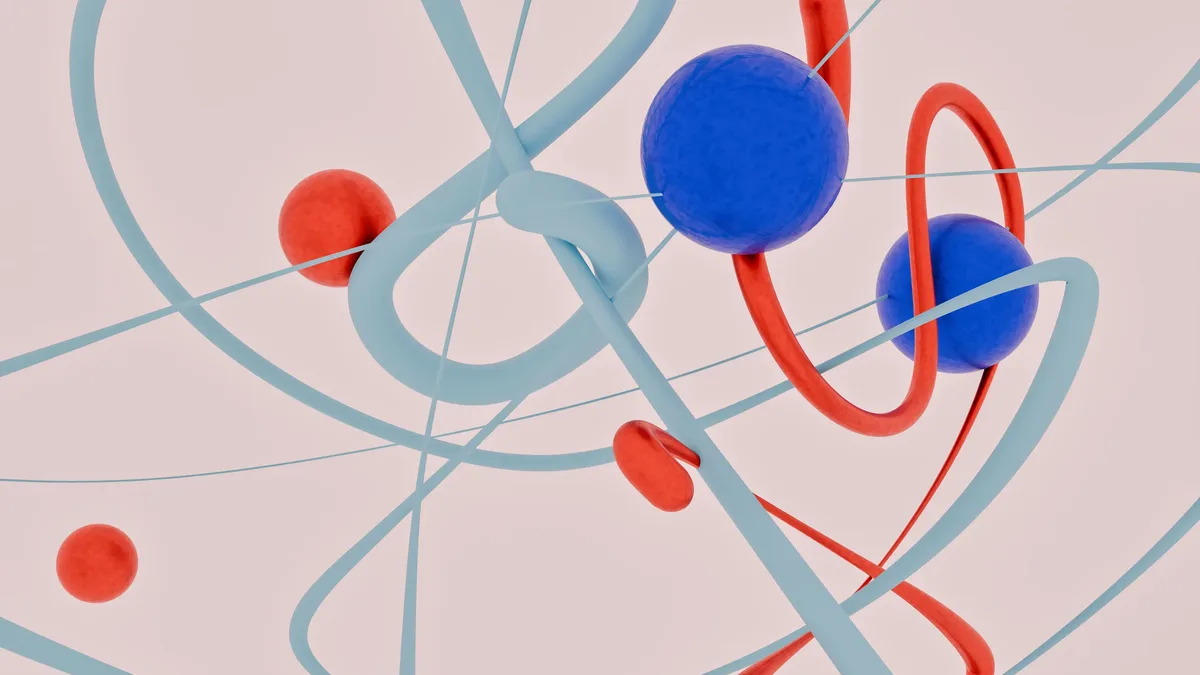
Gluons are the particles that bind quarks together via the strong force. While quarks are often called fundamental building blocks, nearly all the mass of the visible universe comes from the energy carried by gluons. "Understanding how gluons behave inside nuclei is therefore essential to understanding how matter itself acquires its mass and structure," said nuclear physicist Daniel Tapia Takaki, a professor at KU and member of the ALICE collaboration.
Turning the LHC into a microscope
The team used a technique called incoherent J/ψ photonuclear production. During Run 2 of the Large Hadron Collider, fast-moving lead nuclei passed close to each other without directly colliding. The intense electromagnetic fields around these nuclei acted like beams of high-energy photons. When such a photon struck another nucleus, it could briefly produce a J/ψ particle, whose production acts as a sensitive probe of the underlying gluon structure.
This method reveals local changes in gluon density, unlike measurements that average across an entire nucleus. "Our experiments using incoherent production is like switching from a blurry image to a high-resolution microscope," Tapia Takaki said. By varying the momentum transfer, the experiment changed its focus, probing regions at resolutions of 0.6, 0.3, and 0.2 femtometers. The finest resolution corresponds to structures only about one-quarter the size of a proton.
A surprising suppression at small scales
The researchers measured incoherent J/ψ production across photon-nucleus energies from 20 to 633 billion electron volts. They also studied how the process varied with momentum transfer, which sets the spatial scale examined.
"The results revealed a striking pattern," said Tapia Takaki. At the smallest spatial scales, the production rate of J/ψ particles was significantly suppressed, with a statistical significance of about three standard deviations. This finding challenges a long-standing explanation known as nuclear shadowing.
Challenging conventional nuclear shadowing
In the nuclear shadowing framework, gluons inside a nucleus partially overlap and obscure each other, reducing the probability of certain particle production processes. The latest measurements suggest conventional nuclear shadowing alone cannot account for the observed suppression.
Instead, the results align with a phenomenon predicted by quantum chromodynamics, the theory of the strong force. "In this regime, gluons become so densely packed that they begin interacting strongly with one another, limiting how many can exist in a given region," Tapia Takaki explained. This state is known as gluon saturation.
Tapia Takaki has helped pioneer this experimental approach and contributed to theoretical models where gluons gather into localized high-density areas, sometimes called "hot spots." The energy-dependent behavior of these dense regions could provide signatures of previously unexplored physics involving the strong interaction. The work was conducted in collaboration with scientists at the Czech Technical University in Prague.