CERN begins LHC inner triplet replacement for HiLumi upgrade
CERN has started dismantling the Large Hadron Collider's inner triplet magnets.
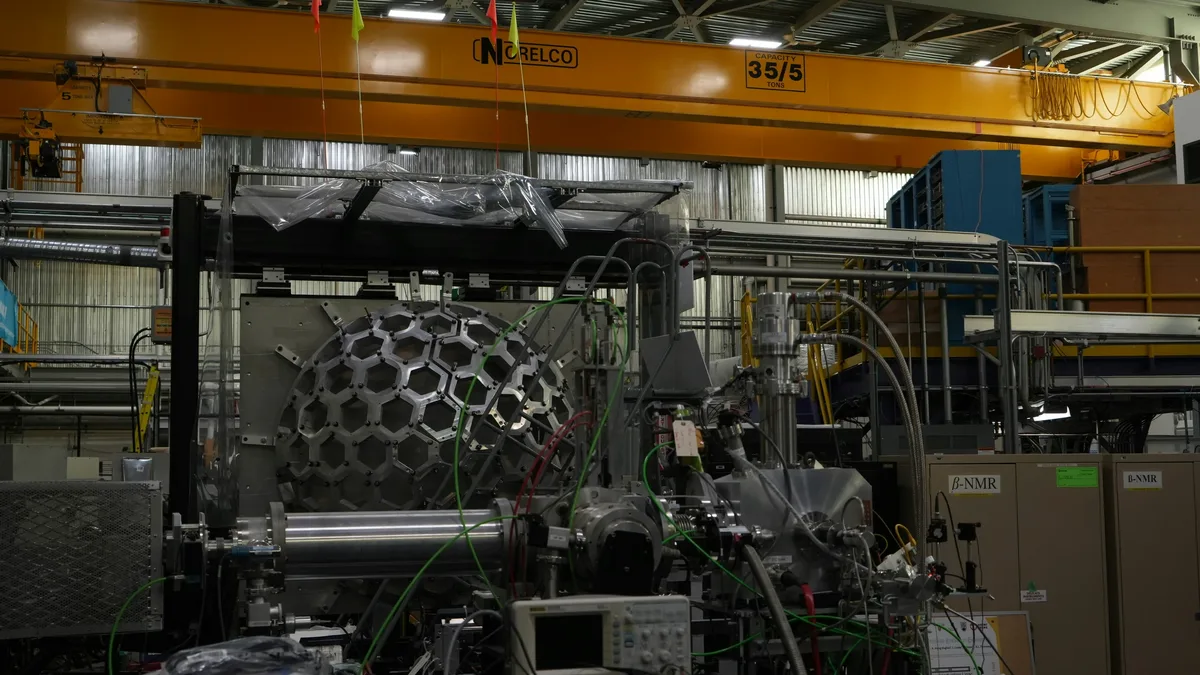
CERN has begun dismantling the current inner triplet magnets at the ATLAS and CMS experiments as part of the High-Luminosity LHC upgrade. The work, occurring during the third long shutdown (LS3), formally started when crews cut the first magnet interconnection this week, with magnet removal work having begun on September 7, 2026. CERN Director-General Mark Thomson visited LHC Point 1 at the ATLAS experiment to recognize the start of the operation.
Technology
The High-Luminosity LHC project involves replacing the existing inner triplets with more powerful magnets. The new versions use niobium-tin superconducting coils instead of niobium-titanium. This advanced technology allows them to generate magnetic fields of up to 11.3 tesla, making them about 40% stronger than the current magnets.
Scale and Scope
The upgrade is a substantial engineering undertaking. In total, 16 cryostats and 28 cryo-assemblies will be installed for the new inner triplets around the ATLAS and CMS experiments. The goal is to remove 28 superconducting magnets, including the inner triplets scheduled for replacement.
Context
Inner triplets are key components consisting of three quadrupole magnets. They are located on both sides of the LHC's four main experiments and focus particle beams tightly just before collision. This higher beam compression increases the likelihood of collisions, thereby raising the machine's luminosity. Luminosity refers to the number of collisions produced over a given time period; more collisions mean more data for physicists. The current inner triplets were installed between 2005 and 2007 and have operated for nearly two decades. While ATLAS and CMS receive new triplets, the ALICE and LHCb experiments will retain their existing ones, as they do not require the same increase in instantaneous luminosity, though they will benefit from the overall upgrade.
The Large Hadron Collider is 27 kilometers in circumference and uses thousands of magnets, including dipoles, quadrupoles, and others, to steer and control particle beams.
Timeline and Leadership
The operation is led by HiLumi LHC Project Leader Markus Zerlauth and LS3 Coordination Team Head Jean-Philippe Tock. The first quadrupole magnet of the new inner triplets should arrive in the tunnel at the start of 2029.